

An overseas licence does not grant permission to serve British customers; assess authorisation, payment terms and safeguards before deciding.
What “Offshore” Means for UK Players
“Offshore” describes the operator, not you or the place where you are sitting. In the UK market, a foreign casino is an online gambling operator that accepts customers in Britain without holding a licence from the UK Gambling Commission (UKGC). It may be based overseas, but its location does not determine whether it is authorised to offer gambling to customers in Britain.
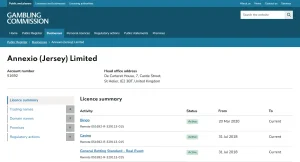
That distinction matters because a company can be licensed in another country and still lack permission to serve the British market. An overseas licence is not a UKGC licence. A site may therefore describe itself as licensed while remaining outside the UK regulatory system. For a British customer, the relevant question is not simply where the operator is based or whether it holds some form of licence; it is whether it has the UKGC authorisation required to offer gambling services here.
The word “offshore” can make the issue sound as though it is mainly about geography. In practice, the key point is the relationship between the operator and the market it serves. A business based abroad that holds the required UKGC licence is not an offshore casino in the sense used here. Conversely, an operator without that licence falls into the foreign-casino category if it accepts British customers, even if its website is accessible from the UK.
If you’re considering offshore casino sites in 2026, use this list as a starting point and check the details that matter to you before choosing. Payout speed is one practical point to keep in mind.
1. NightLuck
Payout speed: 1-3 business days NightLuck lists payouts of 1–3 business days, giving you a stated timeframe to consider.
2. Dieselwin
Payout speed: 1-3 business days Dieselwin lists a payout speed of 1–3 business days. You can use that timeframe as one factor when assessing the site.
3. SlotoSport
Payout speed: 1-3 business days SlotoSport’s stated payout speed is 1–3 business days, a useful detail for you to note.
4. Britsino
Payout speed: 1-3 business days Britsino lists payouts at 1–3 business days, so you have a stated timeframe to bear in mind.
5. WinBeast
Payout speed: 1-3 business days WinBeast gives a payout speed of 1–3 business days. That is the available detail to consider when you review it.
6. NightWin
Payout speed: 1-3 business days NightWin lists a payout timeframe of 1–3 business days, which may help you assess whether it suits your expectations.
7. BeOnBet
Payout speed: 1-3 business days BeOnBet’s stated payout speed is 1–3 business days. You can take this timeframe into account when considering the operator.
8. Revery Play
Payout speed: 1-3 business days Revery Play lists payouts at 1–3 business days, providing you with a stated speed to consider.
9. Jetsetspins
Payout speed: 1-3 business days Jetsetspins gives a payout speed of 1–3 business days. You can use that information as one part of your assessment.
10. Amunbet
Payout speed: 1-3 business days Amunbet lists a payout timeframe of 1–3 business days, a practical detail for you to note.
The operator’s position and the player’s position
British gambling law places the licensing obligation on the operator. In England, Scotland and Wales, an online gambling site must hold a Gambling Commission licence to offer gambling services to customers. Providing gambling facilities to British customers without the required UKGC licence is illegal for the operator. Advertising those services in the UK without the relevant licence is also unlawful.
That does not mean that a British player commits a crime simply by placing a bet with an overseas casino. UK law does not prohibit an individual from betting with a foreign operator, and the player does not face a criminal penalty merely for doing so. The legal distinction is between the operator’s conduct—offering or advertising gambling services in Britain without authorisation—and the customer’s act of playing.
These points are easy to blur together. A site can be outside the UKGC system, while a player who visits it is not thereby breaking the law. Equally, the absence of a criminal penalty for the player does not make the operator’s offer lawful or bring the site under UKGC regulation. The two questions have different answers: whether the operator is authorised to serve the market, and whether an individual is prohibited from placing a bet.
What the label tells you
When people refer to offshore casino sites in the UK, they generally mean sites operating beyond the UKGC’s regulatory framework and accepting British customers without a UKGC licence. “Foreign casino” and “non-UK casino” may be used in a similar way, but the important feature is the missing UK authorisation, not the label a website uses for itself.
Mobile casino pay by phone credit in the UK
The term also does not tell you whether a particular operator holds a licence elsewhere. Nor does an overseas licence change the UKGC position: a licence issued outside Britain is not permission from the UK Gambling Commission to serve British customers. If you see a claim about an operator’s location or licensing, treat it as separate from the question of whether it is authorised for the British market.
This is why phrases such as “best offshore casino” can be misleading if they suggest that a foreign licence makes a site equivalent to a UKGC-licensed one. The description identifies a category; it is not a mark of approval. A site’s own wording cannot replace the regulatory distinction.
For customers, the practical starting point is to understand what the term does—and does not—mean. It identifies an operator that accepts British customers without UKGC authorisation. It does not mean the player is committing an offence, and it does not mean the operator is permitted to offer services in Britain. Keeping those points separate helps you read claims about offshore casinos accurately, without confusing the customer’s legal position with the operator’s responsibilities.
How to Assess Offshore Casino Claims and Connections
Claims about an offshore casino can sound reassuring while leaving important questions unanswered. A statement that a site is licensed does not, by itself, tell you whether that licence covers customers in Britain. Nor does a claim that a casino is independent explain who owns its brands, provides services to it or has a financial interest in its activity. These are separate matters, and they should not be treated as interchangeable.
An overseas licence is not a UKGC licence, and a site may describe itself as licensed while remaining outside the UK regulatory system.
Start by identifying exactly which business a claim refers to. A casino’s public-facing name may be a brand, while a different company operates the site or holds its licence. Look for the legal entity named in the terms and licensing information, then compare it with the entity mentioned in any claim about ownership or commercial relationships. If those names differ, that is not proof of wrongdoing; it is a reason to establish what role each business plays.
The location and scope of a licence also matter. A casino may hold a licence issued outside Britain, but that does not make it regulated by the UK Gambling Commission. Santeda, for instance, holds a Curaçao licence, but that permission does not extend to operating in the UK or the US. The general label “licensed” therefore needs context: licensed by whom, for which entity, and for which markets? A licence claim should not be read as evidence that a site has UKGC approval.
Non-GamStop Curaçao Casino Sites: UK Guide
Commercial independence needs its own scrutiny. Two businesses may have a relationship even if they have different names and perform different functions. A supplier, affiliate, investor or other commercial partner can have an interest in how a casino performs without being the operator or licence-holder. Conversely, a commercial connection alone does not establish that the partner controls the casino or takes responsibility for its gambling services. The useful question is not simply whether a connection exists, but what the documented arrangement says it involves.
The relationship between Santeda and SIS illustrates why the wording of an independence claim matters. Under their contract, SIS was entitled to a share of revenue generated by losing bets placed through Santeda’s brands. That is a specific financial connection to activity on those brands. It does not, on its own, establish that SIS operated them, held their licence or controlled their decisions. It does show why a broad description such as “independent” can be incomplete unless the parties explain what kind of independence they mean.
When you encounter a claim about a company’s role, separate the questions rather than looking for one reassuring label. Who owns or operates the brand? Which entity holds the licence? What territory does that licence cover? Is another business paid under a contract, and how is that payment calculated? Does the wording describe a verified arrangement, or is it an unqualified marketing statement? The answers may be different for each question.
Pay attention to the difference between a fact and an implication. Saying that a casino has an offshore licence is a claim about its licensing status. It does not establish that the site is suitable for a UK customer, that the UKGC oversees it, or that an associated company is uninvolved. Likewise, identifying a revenue-sharing contract tells you that a commercial arrangement exists; it does not settle wider questions about governance or responsibility. Avoid filling those gaps with assumptions in either direction.
Do
- Identify the legal entity named in the terms
- Compare the operator with the entity in ownership claims
- Define the specific scope and territory of any licence
Don’t
- Treat a general “licensed” label as UKGC approval
- Assume a commercial connection implies operator control
- Fill gaps in corporate information with assumptions
It is also worth noticing how precisely a site identifies the businesses involved. Clear terms should let you connect the brand with the company named as operator and understand the licence being claimed. If the wording relies on a group name, a partner’s reputation or a general assurance of regulation without making the relevant entity and jurisdiction clear, the assurance may tell you less than it first appears to. A polished badge or a confident phrase is not a substitute for identifying who is accountable for the service.
None of this requires you to investigate corporate structures as though you were conducting a formal audit. It is a way to read claims with care before relying on them. Treat “licensed”, “independent” and “connected” as terms that need definition, not as verdicts. A documented relationship can be meaningful without proving control; an offshore licence can be real without being a UKGC licence. Keeping those distinctions clear makes it easier to assess what a casino’s statements actually establish—and what they leave unanswered.
What an Offshore Casino Directory Can—and Cannot—Tell You
A directory can help you understand how a site describes itself, but inclusion is not an endorsement. A page labelled as an offshore casino list may collect operators under a broad category without establishing whether any particular site is suitable for you, or whether it is allowed to serve customers in Britain.
The label “offshore licensed” can also be easy to misread. It may mean that an operator says it holds a licence from a regulator outside the UK. That does not make the operator licensed by the UK Gambling Commission, or bring it within the UKGC’s regulatory system. A directory entry, badge or short description cannot change that distinction.
Online Casinos With No Sister Sites in the UK
Read the entry as a claim, not a verdict
When you look through a list of offshore casinos, separate what the listing states from what it actually demonstrates. A licence claim is a statement about the operator; the words “licensed” or “legitimate” on a directory page are not, by themselves, proof of UKGC oversight. Nor does a neat presentation establish that the site will treat customers fairly.
“Legit offshore casinos” is not a precise regulatory category. A site might be described as legitimate because it claims to hold an overseas licence, while still operating outside the rules and protections that apply to UKGC-licensed casinos. The description alone does not tell you what standards apply to your account, or what options you would have if a dispute arose.
This matters because the UK framework is based on the operator’s permission to serve the market, not on whether a directory has included it. Online gambling sites need a UK Gambling Commission licence to offer gambling services in Great Britain. A foreign licence is not a substitute for that UK licence.
What a listing leaves unanswered
A directory may group together casino sites, offshore slots and other gambling services, but those labels do not establish the details that matter to an individual customer. The entry may not make clear which legal entity operates the site, what the stated licence covers, or whether the information still reflects the site’s current position. Do not treat a brief summary as a guarantee about any of those points.
The same caution applies to promotional labels such as “trusted” or “recommended”. Unless the page explains the basis for such wording, it tells you more about how the listing presents the site than about the protections available to you. A directory can organise information; it cannot confer a licence or make an offshore operator subject to UKGC rules.
Attention A directory listing is not a regulator, and being included on a list does not establish that a site is safe or subject to UKGC rules.
That also means an offshore casino directory cannot establish that a site is safe simply by placing it alongside other entries. A list is not a regulator, and a listing is not a resolution process. Gambling.com has reported cases in which unlicensed sites refused to pay winnings, leaving customers without legal recourse. That report is a reason to be cautious about treating a directory label as reassurance, not a claim that every listed operator behaves in the same way.
Use a directory, if you consult one, as a starting point for understanding the claims being made—not as a final judgement. The central question is not whether a site appears on a list, but whether it holds the licence required to offer gambling services to customers in Great Britain. An offshore licence, whatever its stated jurisdiction, does not establish UKGC regulation.
Before You Consider an Offshore Casino Site
The risk that matters most may become clear only when you try to take your money out. A balance shown on an account is not the same as winnings you have successfully withdrawn. If an offshore casino site refuses to pay, you may be left trying to resolve the dispute directly with a business that is outside the UK Gambling Commission’s regulatory system.
A report by gambling.com describes cases in which unlicensed sites refused to pay winnings and customers had no legal recourse. That is not a claim that every foreign operator behaves this way. It does show why a promise on a website, or a balance in your account, should not be treated as a guarantee that you can recover the money. If a disagreement arises, the practical position may be very different from a dispute with a UKGC-licensed operator.
USA Casinos for UK Players: What to Check
Before depositing, consider what you could afford to lose if a withdrawal were rejected and you could not get the decision changed. That includes the deposit itself and any winnings displayed in the account. Do not rely on a large advertised balance to make a site feel safer; the central question is whether you would be prepared to lose access to the money if the operator did not pay.
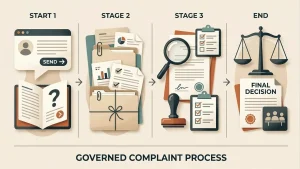
The difficulty is that a dispute can turn on the operator’s own decision about your account or a withdrawal. You may be able to contact its customer support, explain your position and ask for a review, but that does not guarantee a response or a resolution. A complaint process described by the site is not the same as protection from the UK Gambling Commission. Offshore casinos are not regulated by the Commission, so you should not assume that the UK regulator can step in as it would for a licensee.
Keep any records that relate to your account and communications if you decide to proceed. They may help you explain what happened to the operator, though they cannot ensure that it will pay. Avoid depositing more to try to recover money that is already disputed: doing so can increase your potential loss without improving your ability to resolve the original problem.
Be cautious about treating favourable reviews, attractive offers or confident claims as evidence that a particular offshore casino will honour a withdrawal. A site’s public presentation cannot settle how it will handle your account if a disagreement occurs. Nor does a foreign licence make the operator subject to UKGC rules or give you the protections attached to a UKGC licence.
Risk of Loss
If an offshore casino refuses to pay winnings, you may have no legal recourse as they operate outside the UK Gambling Commission’s regulatory system.
This is not a reason to assume that every offshore casino will withhold winnings. It is a reason to make the possible outcome part of your decision before you deposit, rather than after a problem has started. If losing access to the money would cause hardship, the uncertainty is especially important. A cautious decision means weighing the possibility of a refused payout against the fact that you may have little practical recourse—not relying on the hope that a dispute will be straightforward to fix.
Offshore Licences and Getting Your Money Out
A casino licensed outside the UK may accept British customers, but that licence does not put it under the UK Gambling Commission’s oversight. Offshore casinos are not regulated by the UKGC, so a licence issued elsewhere is not a substitute for the protections and regulatory route associated with a UKGC-licensed operator. Keep that distinction in mind when comparing payment claims: a fast payout says nothing by itself about the regulator’s authority over the site.
The time between requesting a withdrawal and receiving money depends on both the payment route and the operator’s own process. A specialist casino review reports that withdrawals through e-wallets such as Skrill and Neteller are cleared by most foreign casinos within 24 hours, with many handled in under 12 hours. These are reported processing times, not a promise that funds will arrive in your account within that period. The operator may first need to approve the request, and the payment service may then take additional time to make the money available.
International Casinos for UK Players: Licensing and Risks
Bank transfers can take longer. A specialist review describes them as the slowest route, often taking five to seven business days, with some casinos adding an internal processing delay before the transfer is sent. That distinction matters: a published banking timeframe may not include the time a request waits in the casino’s queue. If you are relying on a withdrawal for a particular purpose, allow for both stages rather than treating the payment method’s stated timeline as the whole process.
Before depositing, read the payment information and withdrawal terms together. Check whether the site says deposits and withdrawals must use the same route, whether a withdrawal can remain pending, and what steps are required before payment is approved. These details are not consistent across operators. A specialist casino review notes that withdrawal limits, pending periods and verification procedures vary considerably from one casino to another. Do not assume that a process described for one site applies to another, even if both hold licences outside the UK.
It is also worth checking whether the route you plan to use is available for both deposits and withdrawals. A deposit option does not, on its own, establish that it can be used to receive a payout. Look for the operator’s stated withdrawal methods, any conditions attached to them and the timeframes for each stage. If the terms are unclear, that uncertainty is relevant before you put money into the account.
Withdrawal timeframes
E-wallets like Skrill and Neteller are often cleared within 24 hours (many under 12), while bank transfers typically take five to seven business days.
The phrase “offshore casino” describes a site outside the UKGC system; it does not tell you how quickly it will pay or how consistently it will apply its procedures. When comparing casinos with offshore licences, treat payout speed as one practical detail, not evidence of UK regulation. The licence, the operator’s stated process and the payment route are separate considerations, and none should be inferred from a headline claim about fast withdrawals.
Bonuses and Games: Read the Terms Before You Play
A large welcome offer can look generous before you know what you must do to use it. A specialist review reports that offshore casinos may advertise larger welcome packages because they are not bound by UKGC restrictions on bonus terms, wagering requirements and promotional language. That difference is not evidence that an offer is better value, or that the casino is regulated by the UK Gambling Commission.
The bonus formats most often identified in specialist reviews of foreign casinos serving UK players include:
- Deposit matches, which add a bonus in relation to a qualifying deposit.
- Free spins, which provide spins subject to the offer’s conditions.
- No-deposit bonuses, which are offered without a qualifying deposit.
- Cashback, which returns a portion of eligible losses under stated terms.
Those labels describe the promotion, not what you can ultimately withdraw. Before accepting an offer, read the terms alongside the headline. Check what counts as qualifying play, whether the bonus must be activated, which games are eligible and whether winnings are subject to restrictions. The details can determine whether the offer fits how you intended to play.
The same care applies when browsing offshore casino games. A site may advertise a wide selection, but that does not establish that a particular game, provider or feature has been checked. If you are considering a bonus, look for the terms that explain whether different games contribute differently towards its conditions. Do not assume that every game on a site qualifies simply because the promotion is displayed beside the games lobby.
Promotional wording can also make an offer sound less conditional than it is. Look for the full terms before registering or depositing, not only the banner or short description. If key conditions are hard to find or unclear, you cannot reliably judge the value of the offer. A bigger headline amount does not remove those uncertainties.
Casino App UK Guide: Apps, Browsers and Mobile Play
A foreign licence, if a site holds one, does not make it UKGC-regulated. Offshore operators are outside the UK Gambling Commission’s regulatory system, and UKGC-mandated affordability checks do not apply to them. So a claim that a casino is “regulated” should not be read as meaning it has the protections attached to a UKGC licence. Nor does a bonus offer establish that a site is safe or that you will have the same recourse available with a UK-licensed operator.
Keep the promotion separate from the decision to play. If you choose to consider an offer, make sure you understand its conditions and can afford to lose any money you deposit. You do not need to accept a bonus to use a casino, and declining one avoids taking on that promotion’s requirements. The next step is to work out what wagering conditions mean in practice: the headline offer alone cannot tell you how much qualifying play may be required before bonus funds become withdrawable.
How Wagering Requirements Change a Bonus’s Value
A bonus is not the same as cash you can withdraw. A wagering requirement sets how much you must stake on qualifying bets before bonus funds become available to cash out. The multiplier is applied to the bonus amount, not treated as a promise that you will win that amount back.
Bonus Wagering
Step 1: Identify the bonus
Start with the bonus amount, for example, £20.
Step 2: Apply the multiplier
Multiply the bonus by the wagering requirement (e.g., 35x).
Step 3: Calculate total stake
£20 × 35 = £700. This is the total amount of qualifying bets required before cashing out.
A specialist review illustrates the calculation with a £20 bonus carrying a 35x requirement: £20 multiplied by 35 means £700 in qualifying bets must be placed before you can cash out. That figure is the total value of bets, not the amount you need to lose. Whether any balance remains after wagering depends on the results of those bets.
The same arithmetic makes a larger offer look different from its headline. With a 100% match bonus of £100 and a 35x requirement, the bonus funds require £3,500 in qualifying bets before they convert to withdrawable cash. The match percentage does not remove the wagering condition; the requirement still applies to the bonus amount.
When comparing an offshore casino bonus, read the requirement alongside the amount being offered. A larger bonus can create a much larger wagering target, so the headline figure alone says little about how readily funds can be withdrawn. Check which bets count towards the requirement and whether the terms distinguish bonus funds from your own deposit. Those details affect how the calculation works in practice.
The same caution applies to an offshore casino no-deposit bonus. An offer that requires no initial deposit can still come with a wagering condition before any resulting funds are withdrawable. A label such as “best” does not tell you how much qualifying betting is required or whether the offer suits your circumstances. The multiplier and the bonus amount are more useful starting points.
Non-UK-Regulated Casinos: Rules for UK Players
If you are looking at offshore bitcoin casinos, the currency or payment method does not change the basic calculation: a wagering requirement still determines how much qualifying betting is needed. Work through the multiplication before accepting an offer, then read the terms that define qualifying bets. If the required betting is more than you are comfortable with, declining the bonus avoids taking on that condition.
Crypto Withdrawals: Speed and Value Risk
Crypto can make a withdrawal from an offshore casino look attractive because the transfer may arrive quickly. A specialist casino review reports that crypto withdrawals at foreign casinos often clear in under an hour, faster than fiat withdrawals. Treat that as a reported experience, not a promise: the time you receive funds can depend on the operator’s handling of the request and the transfer itself.
Speed is only one part of the decision. Cryptocurrency values can move, so the amount you receive may not retain the same value between a withdrawal being requested and your ability to exchange or spend it. A transfer that clears quickly can reduce the time exposed to those movements, but it does not remove the risk. The value can change before the funds arrive, or afterwards while you hold them.
Before choosing crypto, check what the casino says about withdrawals, including any conditions attached to the method and whether it pays out in the same currency you deposited. Make sure you understand how you would access or convert the funds, too. If you are unfamiliar with crypto transfers, the speed may not compensate for the added complexity or uncertainty about value.
Cryptocurrency values can fluctuate between the time a withdrawal is requested and the time it is exchanged or spent.
A casino accepting crypto is not necessarily more trustworthy because it can process a withdrawal quickly. Offshore crypto casinos are not regulated by the UK Gambling Commission, and they do not provide UKGC-mandated affordability checks. A fast transfer does not give you the protections associated with a UKGC-licensed operator, nor does it guarantee that a future withdrawal will be handled in the same way.
Keep the amount at risk within what you can afford to lose, and do not treat a reported processing time as a reliable deadline. The practical question is not simply how soon the funds might arrive, but whether you are comfortable with the possibility that their value may change and with the different protections that apply outside the UKGC system.
Verification, Self-Exclusion and Safeguards
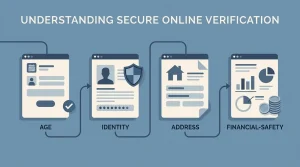
Identity checks and self-exclusion work differently at UKGC-licensed casinos and at foreign sites outside the regulator’s remit. A “no KYC” claim should not be read as proof that an operator will never ask you to confirm your identity. Requirements can vary, and the phrase alone tells you little about what checks may apply to your account.
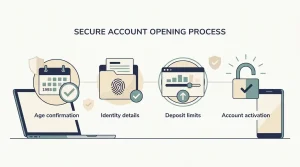
At UKGC-licensed operators, your identity must be verified before a withdrawal is processed. Operators must also verify your age before allowing you to deposit. These requirements sit within the UK regulatory framework; an offshore casino is not regulated by the UK Gambling Commission and does not provide UKGC-mandated affordability checks. Do not assume that a foreign site offers the same safeguards simply because it asks for identification or describes its security measures.
GamStop provides a clear boundary across UK-licensed gambling sites: if you register for self-exclusion, you are excluded from every UKGC-licensed operator covered by the scheme. Foreign casinos outside the UKGC’s remit are not part of GamStop. That means the exclusion does not automatically prevent you from opening an account there.
A specialist review reports that a person who has self-excluded through GamStop may be able to register with a foreign casino and deposit without those safeguards. Treat that possibility seriously if you chose self-exclusion to create distance from gambling. A site being accessible is not evidence that it is appropriate for you, and a registration process should not be mistaken for a meaningful barrier.
Before entering personal details, check what identity information the operator may request and how it says it handles it. If you are relying on GamStop to keep you away from gambling, do not treat an offshore site as an exception that makes the exclusion less important. Its systems are outside GamStop’s coverage, and UKGC protections do not extend to it.
Alternatives to Offshore Sites—and When to Step Back
If you want a regulated option, use an online casino that holds a current licence from the UK Gambling Commission. Operators serving customers in Great Britain must have the relevant licence; a licence issued overseas does not replace it. UKGC-licensed sites are also the setting in which the British rules and safeguards apply. Offshore casinos are outside the Commission’s regulatory system, and they do not provide UKGC-mandated affordability checks.
Casino Types & Safety: UK Licensing and Access
That distinction matters when weighing offshore casino alternatives. The choice is not simply between different brands or offers: it is between a site regulated for the British market and one that is not. If you are unsure which applies, check the operator’s licensing information against the UK Gambling Commission’s own register before opening an account. Do not treat a foreign licence as evidence of UKGC oversight.
There is an important difference between the operator’s position and yours as a player. The Gambling Act does not make it a criminal offence for a UK resident to place a bet with a foreign casino, and the player does not face a criminal penalty simply for doing so. That does not mean an offshore operator is authorised to offer gambling services in Britain: operators serving the market without the required UKGC licence are acting outside the British licensing rules.
If you are considering an offshore internet casino, pause if you cannot establish who regulates it or what protections apply. Choosing a UKGC-licensed site is the regulated alternative; stepping away from gambling altogether is also a reasonable choice if the decision feels pressured or difficult to control.
What does a wagering requirement actually mean in practice?
It is the amount you must bet on qualifying games before bonus funds can be withdrawn. For example, a 35x requirement on a £20 bonus means placing £700 in qualifying bets.
Can I play at a casino licensed outside the UK?
Yes, playing at an overseas-licensed casino is not illegal for a British player. However, an overseas licence does not authorise the operator to offer gambling services in Britain; that requires a UK Gambling Commission licence.
Are gambling winnings subject to income tax in the United Kingdom?
No. Gambling winnings are not subject to UK income tax, whether they come from a UKGC-licensed operator or one licensed abroad.
What should I do if a casino refuses to pay my winnings?
Keep records of your account, bets and communications, and check which company operates the site and what licence it holds. Customers of unlicensed sites have sometimes been refused payment and left without legal recourse.
How do I know if an online casino is safe?
Check the operator’s legal entity and whether it holds a UK Gambling Commission licence to serve British customers; an overseas licence is not UKGC approval. Also check who owns or operates the brand and what role any named commercial partners have.
How long do withdrawals take at the listed operators?
For foreign casinos, Skrill and Neteller withdrawals often clear within 24 hours, while bank transfers commonly take five to seven business days and crypto withdrawals can clear in under an hour. Processing delays, verification and withdrawal limits vary by operator.
What happens if I have a dispute with a foreign casino?
Your options may be limited if the operator is unlicensed to serve UK customers: some customers have been refused winnings without legal recourse. Check the operator’s licence and the legal entity named in its terms before depositing.
Are foreign casinos safe for UK players to use?
Not necessarily: a foreign licence does not provide UKGC regulation or the protections of a UK-licensed site. Some unlicensed operators have refused to pay winnings, and customers have been left without legal recourse.
Material created by the team LottoGo