

A practical guide to checking casino licensing, clear rules and available protections before committing money to online play.
What a Trustworthy Casino Looks Like in Practice
Trustworthiness is not a promise that every game will go your way or that every interaction will be effortless. It is a set of conditions you can check: the operator is accountable to the relevant regulator, its rules are understandable before you commit, and the protections it describes are available when you need them. A polished website or confident claim of being “safe” is not evidence on its own.
For a casino serving customers in Great Britain, the starting point is a UK Gambling Commission (UKGC) licence. Remote gambling businesses need the relevant licence to offer facilities to consumers there, wherever the business itself is based. That means a company’s registered address abroad does not remove the requirement. A trustworthy casino should make it possible to identify the licensed business behind the brand, rather than leaving you to rely on a logo or a vague statement that it is regulated.
The name on a casino’s pages may differ from the name of the licensed company. That is not, by itself, proof of a problem, but the connection should be clear and capable of being checked. If the operator’s identity is difficult to establish, or its licensing claims do not match the business responsible for the site, pause before treating those claims as reassurance. Accountability depends on knowing which company is answerable for the service.
When assessing an online casino, you may want to consider how long payouts take alongside other factors. This list gives you the payout-speed information available for each operator.
1. NightLuck
Payout speed: 1-3 business days NightLuck lists a payout speed of 1–3 business days, giving you a stated timeframe to consider.
2. Dieselwin
Payout speed: 1-3 business days Dieselwin lists a payout speed of 1–3 business days, which you can factor into your assessment.
3. SlotoSport
Payout speed: 1-3 business days SlotoSport lists a payout speed of 1–3 business days, providing you with a stated payout timeframe.
4. Britsino
Payout speed: 1-3 business days Britsino lists a payout speed of 1–3 business days for you to consider.
5. WinBeast
Payout speed: 1-3 business days WinBeast lists a payout speed of 1–3 business days, giving you a timeframe for payouts.
6. NightWin
Payout speed: 1-3 business days NightWin lists a payout speed of 1–3 business days, a useful detail for you to note.
7. BeOnBet
Payout speed: 1-3 business days BeOnBet lists a payout speed of 1–3 business days, so you have a stated timeframe to consider.
8. Revery Play
Payout speed: 1-3 business days Revery Play lists a payout speed of 1–3 business days for payouts.
9. Jetsetspins
Payout speed: 1-3 business days Jetsetspins lists a payout speed of 1–3 business days, giving you one concrete detail to weigh.
10. Amunbet
Payout speed: 1-3 business days Amunbet lists a payout speed of 1–3 business days for you to take into account.
Rules you can understand before you play
A trustworthy operator explains its terms in language you can follow. You should be able to find the rules that affect your account without searching through contradictory pages or relying on a promotional headline. The important question is not whether a site has a long terms page; it is whether its conditions are presented clearly enough for you to understand what they mean in practice.
That applies to promotions as well as ordinary account use. A prominent offer can attract attention while leaving important conditions out of view. The full terms should make clear who can take part, what actions are required, which games or payment routes are treated differently, and when an offer ends. If a key condition is difficult to locate or the wording leaves you unsure what will happen, do not assume the most favourable interpretation.
Clear rules also matter when something goes wrong. An operator should explain how to contact it, what information it may need to look into a concern, and how a decision can be challenged. Good presentation is not a substitute for a useful response, but the route to help should not be hidden or described so vaguely that you cannot tell what to do next.
No Account Casinos in the UK: What to Check
Protections that work in real use
A policy only provides reassurance if the controls behind it function. The operator should make its safer-gambling tools visible and usable, not treat them as small print that you discover only after a difficult session. Pay attention to whether the site lets you take meaningful action on your account and whether the choices are explained in plain terms. A protection that is hard to find, confusing to activate, or presented as a mere suggestion may not offer the practical support its wording implies.
Trust also shows in how the casino communicates. Messages should be accurate and relevant, and the operator should respect the choices you make about receiving promotions. If the site’s language pressures you to continue, makes stopping feel like a missed opportunity, or blurs the difference between entertainment and financial risk, that is a reason to step back. A responsible service does not need to make you feel hurried into a decision.
These standards do not mean that a licensed casino can never make a mistake. On 26 June 2025, the UK Gambling Commission fined Grace Media £60,000 over failures concerning self-exclusion and consent for direct electronic marketing. The case is a useful reminder that regulatory oversight is important, but it does not remove the need to consider how an operator behaves. A licence is a starting condition for trust, not a guarantee that every safeguard will work perfectly in every situation.
Trustworthiness Indicators
- A clearly identifiable licensed business
- Rules that are understandable before you accept them
- Protections that are accessible and usable during play
When judging a trustworthy online casino, look for consistency between what it claims and what you can verify: a clearly identifiable licensed business, rules that make sense before you accept them, and protections that are accessible during play. If any of those pieces is missing, a reassuring design or generous-sounding offer should not fill the gap. You do not need to resolve every uncertainty in the operator’s favour; you can choose not to proceed until the essential information is clear.
How UK Gambling Regulation Affects Your Search
When you assess whether an online casino is trustworthy, the first legal question is where it offers gambling, not where the company has its offices. The Gambling Commission regulates remote gambling provided to consumers in Great Britain. An operator based overseas still needs the relevant UKGC Licence if it offers real-money gambling to customers in England, Scotland or Wales.
That distinction matters because an overseas address does not, by itself, put a casino outside British rules. The relevant point is whether the operator is offering gambling to people in Great Britain. If it does, its location does not remove the requirement for a Gambling Commission licence. A site’s own description of its status is not a substitute for the regulator’s remit.
Offshore Casino Sites for UK Players: What to Know
Great Britain and the Commission’s remit
The Gambling Act 2005 is the central legal framework for gambling in England, Wales and Scotland. Within that framework, the Gambling Commission oversees remote gambling offered to consumers in Great Britain. Its role is therefore relevant when you are considering an online casino serving people in those parts of the UK.
The practical consequence is straightforward: a company offering real-money casino gambling to customers in England, Scotland or Wales must hold a UKGC Licence. This applies whether the business is based in Great Britain or elsewhere. A brand may operate through a company with an overseas address, but that fact does not exempt it from the licensing requirement if it serves the British market.
This is one reason a broad claim that a casino is “UK-based” or “available to UK players” is not enough to establish its legal position. Those phrases do not identify the regulator or confirm that the service falls within the licensed British system. The question is whether the operator holds the relevant permission to provide remote gambling to consumers in Great Britain.
Non-GamStop European Casinos: What to Know
Northern Ireland is treated differently
Northern Ireland is not within the Gambling Commission’s remit for remote-gambling provision. The Commission’s authority under the Gambling Act 2005 should therefore not be described as applying across the whole United Kingdom in the same way. Northern Ireland has a separate legal framework, including the Betting, Gaming, Lotteries and Amusements (Northern Ireland) Order 1985.
This difference can make general statements about “UK casino regulation” imprecise. A rule or licensing requirement described for Great Britain should not automatically be presented as the rule for Northern Ireland. If you live in Northern Ireland, the Commission’s public register cannot, on its own, answer every question about the legal framework that applies where you are.
The distinction is geographical and regulatory, not merely a difference in wording. Great Britain means England, Scotland and Wales; Northern Ireland is outside that specific Gambling Commission remit for remote gambling. So a statement about a UKGC Licence is directly relevant to a casino offering real-money gambling in Great Britain, while the position in Northern Ireland must be considered under its own legal arrangements.
Regulatory Remit
Great Britain refers to England, Scotland, and Wales, while Northern Ireland operates under a separate legal framework and is outside the Gambling Commission’s remit for remote gambling.
What the distinction means for trust
People looking for the most trustworthy online casinos are often trying to find a service with clear accountability. In Great Britain, the licensing requirement gives you a concrete legal reference point: remote operators serving consumers there need the relevant Gambling Commission licence. It does not mean that a licence makes every interaction effortless or removes the need to understand a casino’s terms. It does establish that the operator is required to be within the regulator’s system when it offers gambling to the British public.
The legal scope also helps you interpret a casino’s claims. If a site says it accepts customers from Great Britain, but presents no clear indication that it has the relevant UKGC Licence, that mismatch deserves attention before you treat the site as a regulated British casino. The key issue is not whether the site looks familiar, uses British currency or has a British-facing page. Those details do not change which regulator has authority over the service.
Likewise, a business’s overseas location is not proof that it is unlicensed for Great Britain. The licensing requirement follows the market it serves, rather than the country in which its offices or company registration are found. This is important when comparing operators with different corporate addresses: the address alone neither confirms nor rules out the required British permission.
Merkur Casino Online UK: Slots and Site Checks
Read claims in their proper territory
A casino can use broad language such as “available in the UK” without explaining whether it means Great Britain, Northern Ireland or both. Treat that wording carefully. The Gambling Commission’s remit covers remote gambling offered to consumers in Great Britain, but it does not extend to Northern Ireland on the same basis. A statement about one jurisdiction should not be assumed to settle the other.
If you are in England, Scotland or Wales, the central legal question is whether the operator has the relevant Gambling Commission licence to provide real-money gambling to customers in Great Britain. If you are in Northern Ireland, do not treat the Commission’s Great Britain remit as a complete account of the rules applicable there. Keeping those jurisdictions distinct makes claims about regulation easier to assess without confusing a company’s location, the audience it serves and the regulator responsible for that market.
GAMSTOP and Casinos Outside the Scheme
GAMSTOP is a self-exclusion service for people who want to restrict their access to online gambling. For a player who has chosen to exclude themselves, its value depends on participating operators respecting that choice. In Great Britain, participation is not an optional feature that a UKGC-regulated remote casino can decide to leave out: the Gambling Commission made it compulsory for operators in its regime from 31 March 2020.
That makes a claim such as “not on GAMSTOP” important to interpret carefully. If a site offers remote gambling to customers in Great Britain but says it does not participate, that does not describe an ordinary exception available to a UKGC licensee. It signals that you should check whether the operator is actually authorised to serve the British market, rather than treating the statement as a special selling point.
Non-GAMSTOP Risks
Using a site outside the GAMSTOP scheme to bypass self-exclusion undermines the barriers you put in place and may signal that the operator is not authorised for the British market.
A site may use wording about being a non-GAMSTOP casino to appeal to people who want to gamble despite having self-excluded. That can sound like a route around a restriction, but it is not evidence of trustworthiness. If you have activated self-exclusion, using a site outside the scheme can undermine the barrier you put in place. A different name, website or licence claim does not make that risk disappear.
What the claim does—and does not—tell you
“Not on GAMSTOP” alone does not establish who operates a site, what licence it holds or whether it can legally offer gambling to people in Great Britain. Nor does the claim prove that the operator is dishonest. It is a reason to verify the site against the Gambling Commission’s public register and to check that the register’s details match the operator and the domain you are considering.
If the site cannot be matched to a relevant UKGC authorisation, do not treat it as a British-regulated casino simply because its pages mention UK players, sterling or familiar games. Those details do not replace a licence. A foreign licence, where one is claimed, is not the same as a UKGC Licence for serving customers in Great Britain.
The distinction matters most when something goes wrong or when you need a protection to work. A casino outside the UKGC regime is not required by the Commission to participate in GAMSTOP as a British licensee is. You should not assume that a self-exclusion request made through GAMSTOP will stop access there, or that the operator is subject to the same British regulatory oversight. Avoid relying on the site’s own description of its safeguards without checking the regulatory position.
Non-UK-Regulated Casinos: Rules for UK Players
If you have self-excluded
If you used GAMSTOP because gambling was becoming difficult to control, searching for a trustworthy casino outside the scheme is not a neutral comparison. It is an attempt to reach gambling through a route that may not honour the restriction you chose. You do not need to test that route to find out whether it is safe. Keep the exclusion in place and consider contacting a support service if the urge to gamble is becoming hard to manage.
If you have not self-excluded, the same label still calls for caution. A casino that openly emphasises non-participation may be addressing people whom the scheme is meant to protect. Do not infer that it is more flexible, more private or more reliable. First establish whether it is authorised for the market it is targeting; if it is not, it is outside the British licensing framework.
The practical point is simple: for Great Britain, a remote operator regulated by the Gambling Commission must be part of GAMSTOP. A claim to the contrary should prompt you to question the site’s regulatory status, not to regard absence from the scheme as a mark of trust.
Real-Money Play: Checks to Make Before You Deposit
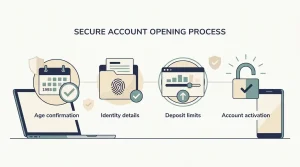
A trustworthy real-money casino should make its checks and controls clear before you put money into an account. Treat registration as a point to confirm how the site handles your identity, spending limits and complaints—not as a formality to rush through.
Before You Deposit
- Verify the operator’s identity and license
- Confirm you are at least 18 years old
- Set a financial limit on your account
- Locate the operator’s complaints procedure
Identity checks come before play
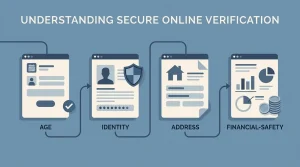
Under UK rules, an operator must verify your identity before you can deposit or gamble. A site that invites you to fund an account first and promises to check your details later is not following that requirement. You must also be at least 18 to gamble legally with a UKGC-licensed operator.
Be ready to answer identity or payment-ownership questions. Verification may involve a photo of your passport or driving licence, together with a recent utility bill as proof of address. Check that the requested documents are submitted through the operator’s own secure account area, rather than sent through an unexpected message or to an address you cannot verify.
Make sure your registration details are accurate and consistent with your documents. Differences in your name or address can lead to follow-up questions, and it is better to resolve them before attempting to deposit than to discover a problem when you want to use the account.
Set a financial limit before funding the account
Remote operators must prompt new customers to set a financial limit before their first deposit. The account should also make limit controls accessible, so you can review or adjust them without having to search through support pages.
Choose a limit that fits your circumstances, not one suggested by a promotion or by the amount the site will accept. A limit is a boundary for your spending; it does not make gambling a way to manage bills or recover losses. If the controls are difficult to find, or the site encourages you to skip setting a limit, pause before proceeding.
UK Online Casino Payouts: RTP and House Edge
Pay attention to how changes take effect. A reduction applies straight away, while an increase is subject to a cooling-off delay. That difference matters: lowering a limit can help you act promptly, but raising one should not be something you can do impulsively and use at once.
Know what happens if something goes wrong
Before depositing, find the operator’s complaints procedure and read how to submit a complaint and what information to include. UKGC licensees must provide an internal process and access to an approved Alternative Dispute Resolution service if a complaint remains unresolved. The route should be clearly explained, not hidden behind vague promises that customer support will “look into it”.
Keep copies of relevant messages and records of transactions if you later need to explain a problem. Contact customer support through the channels shown on the casino’s own site, and use the stated complaints process if ordinary support does not resolve the issue. If you cannot find either route, that is a practical reason to wait rather than deposit.
A careful check is not a guarantee that every interaction will be smooth. It does give you a clearer view of what the operator requires from you, what control you have over spending, and where you can turn if a dispute arises. If any of those basics are unclear, do not let the prospect of playing push you into funding the account first and asking questions later.
Do
- Use secure account areas for documents
- Set limits based on your circumstances
- Lower limits immediately when needed
Don’t
- Deposit before identity verification
- Skip setting a financial limit
- Raise limits impulsively without cooling-off
Online Slots: Limits and Safer Play Controls
A trustworthy slot experience is not defined by its graphics or game selection. Look for controls that put boundaries around play and rules that prevent spins from being rushed. In Britain, online slots cannot offer autoplay, and each spin must take at least two and a half seconds. If a game appears to let you set spins running automatically, or moves faster than that, stop and check what you are using before continuing.
Stake limits also apply. Players aged 25 and over may stake no more than £5 on a spin; for those aged 18 to 24, the maximum is £2. These are legal ceilings, not suggested amounts to spend. You can choose a lower personal limit, and doing so may help keep play within an amount you can afford to lose.
Account controls should be easy to find and understand. Remote operators must prompt new customers to set a financial limit before their first deposit and provide accessible account-level limit controls. Check whether you can set limits that reflect your own circumstances, rather than treating the legal maximum as a target. If you want to reduce a limit, the change applies immediately. An increase is subject to a cooling-off delay, giving you time to reconsider before having more room to spend.
Self-exclusion should also be available as a practical control, not hidden behind confusing menus. If you decide to stop, use the casino’s self-exclusion tool and check what it covers. A limit can help manage spending, but it is not a substitute for taking a break when play no longer feels manageable. UK-licensed casinos must provide responsible-gambling tools, including self-exclusion.
International Casinos for UK Players: Licensing and Risks
Pay attention to how the game behaves as well as to the controls. A slot should not pressure you to act faster, disguise the value of a stake, or make it difficult to leave. Take a pause if you notice that you are chasing losses, spending more time than intended, or raising stakes to recover money. These are reasons to step away, not signs that another spin is due to solve the problem.
If you need support, the National Gambling Helpline is available around the clock on 0808 8020 133. A casino’s safer-play tools can help you set boundaries, but outside support may be useful if those boundaries are becoming hard to keep. Trustworthy online slots should operate within the rules and make protective controls usable; no game can remove the risk of losing money.
Payments, Withdrawals and Bitcoin Claims
A payment method’s name does not tell you how quickly a withdrawal will reach your account. Separate the casino’s approval time from the time taken by the payment provider or bank. A withdrawal may be waiting for the operator to review it before the transfer even begins, so a published processing estimate is not necessarily the full wait.
One specialist review reports PayPal withdrawals clearing in roughly 4–6 hours on weekdays, with the estimate extending to 8–10 hours from Friday to Sunday. Treat that as a reported timeframe, not a promise that applies to every casino or transaction. The same review puts debit card withdrawals at 2–3 banking days after the operator has reviewed the request. Bank transfers may carry a £2–£5 charge, depending on your bank’s policy. Check the casino’s own payment terms and your bank’s charges before relying on any estimate.
Typical Withdrawal Timeframes
PayPal withdrawals may clear in 4–6 hours on weekdays and 8–10 hours from Friday to Sunday. Debit card withdrawals typically take 2–3 banking days after operator review.
A first withdrawal can take longer if the operator needs to resolve identity or payment-ownership questions. A specialist review reports an extra 12–24 hours for document checks on first-time withdrawals. That additional time is distinct from the payment’s journey after approval. If you are waiting, check whether the withdrawal is still under review and whether the operator has asked you for anything; do not assume that a provider delay means the casino has sent the money.
Also check which methods are available for withdrawals, not just deposits. Deposit and withdrawal availability are separate, and the terms should explain any restrictions, fees or steps that apply to the route you intend to use. If those details are difficult to find, ask for clarification before sending money.
A Bitcoin option, or a claim that a site is a trustworthy Bitcoin casino, is not evidence of trustworthiness by itself. The payment label does not establish that the operator is authorised to serve customers in Great Britain, that withdrawal rules are fair, or that a dispute will be handled properly. Treat claims about fast or easy crypto withdrawals with the same care as any other payment promise: look for clear, accessible terms and make sure you understand how a withdrawal is requested and processed.
Do not let a familiar payment brand or a cryptocurrency option distract you from the operator behind the account. A payment route can be convenient while the casino’s rules remain unclear. Before depositing, know what happens when you withdraw, whether the method you plan to use is supported for payouts, and what charges or review steps could affect the amount or timing. If the terms leave those points uncertain, pause rather than relying on a headline claim.
Mobile casino pay by phone credit in the UK
Assessing Casino Offers Without Letting the Bonus Lead
A large welcome offer can look valuable while leaving important conditions in the small print. Treat it as one part of assessing a casino, not as evidence that the operator is trustworthy. Read the full promotion terms before opting in, and consider whether you would still want to use the site without the offer.
Wagering requirements show how much play is needed before bonus-related winnings can be withdrawn. A specialist review illustrates the calculation with a £20 bonus carrying 10x wagering: that means £200 in total stakes. The figure is the required turnover, not a promise that you will finish with that amount or withdraw a profit. Check whether wagering applies to the bonus, the deposit, or both, and which games count towards it. If the terms are unclear, do not assume the most favourable interpretation.
Eligibility can also affect value. A specialist review describes welcome deals as often restricted to new customers, with one offer allowed per household; it also notes that some payment methods, including e-wallets, may be excluded. Confirm the conditions for the particular promotion before depositing. Deposit and withdrawal availability are separate, so an excluded method may affect whether you qualify even if it appears as a payment option.
Bonus Conditions
Attention: Wagering requirements mean you must reach a specific turnover (e.g., 10x a £20 bonus equals £200 in stakes) before bonus winnings can be withdrawn.
Check when bonus funds or wager-free spins expire. A specialist review reports that these can have a stated expiry period commonly ranging from 7 to 30 days, but the terms for an individual offer are what matter. Look for the exact expiry trigger and whether unused rewards or related winnings are removed when the period ends.
Casinos must give customers more control over the types of promotions they receive and the channels used to send them. That control does not make an offer suitable for you. If the conditions would push you to spend more, play longer, or accept a pace you had not planned, decline it. A trustworthy choice should make sense on its own terms, without the bonus doing the persuading.
What Casino Reviews Can—and Cannot—Verify
A casino review can help you identify what to check, but it cannot establish that an operator is trustworthy. Treat claims about licensing, ownership or dispute handling as leads, then look for confirmation in records maintained by the regulator. A polished page, detailed rating or confident recommendation is still an opinion unless the underlying evidence can be checked.
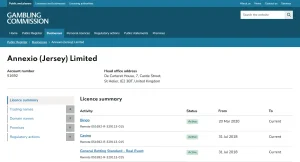
Start with the exact domain you intend to use. The UK Gambling Commission’s public register can connect a website to a licensed operator, so compare the domain and the operator details rather than relying on a badge or a review’s summary. For instance, the register identifies leovegas.co.uk as an active UK-facing domain for account 39198 and lists the operator as LeoVegas Gaming PLC. That gives you a concrete point to verify; it does not prove that every customer interaction will be trouble-free.
Offshore Casinos for UK Players: Risks and Rules
Reviews may also describe a casino as part of a larger group or as a white-label brand. Those labels need careful checking: they do not replace confirmation that the particular domain appears in the regulator’s records. If a review and the public register disagree, do not treat the review as the stronger evidence. Check the operator and domain directly before deciding whether to use the site.
Look beyond a review’s overall verdict to how it supports its claims. Does it distinguish independently checked details from information supplied by the operator? Are dates clear, and does the page explain what it could not verify? A review that states a bonus or service feature without linking it to current terms may quickly become outdated. User comments can signal an issue worth investigating, but individual accounts are not a regulatory finding.
Regulatory records can also show whether enforcement action has occurred. The Gambling Commission fined Grace Media £60,000 on 26 June 2025 over breaches involving self-exclusion and consent for direct electronic marketing. This is a specific, dated record—not proof that every site associated with an operator has the same problem, nor a reason to ignore the circumstances. It is more useful than an unsupported review claim because it identifies the regulator’s action and the issues involved.
Use reviews to form questions. Use the register and published enforcement decisions to test the answers.
Are Online Casinos Trustworthy by Default?
Online casinos are not trustworthy simply because they are familiar, polished or easy to use. A regulated operator has to meet legal requirements, but regulation is not a promise that every decision, interaction or customer experience will be trouble-free.
Licensing Baseline
A UKGC Licence is a baseline of regulatory oversight and accountability, not a personal guarantee of a trouble-free experience.
For players in Great Britain, a casino offering real-money gambling must hold a UKGC Licence. That places its service within the Gambling Commission’s regulatory system and gives the regulator powers to set requirements and act when an operator breaches them. It is a meaningful distinction from a site operating outside that system, but it does not remove the need to consider how the individual operator behaves.
Even within a regulated service, practical problems can still arise. A customer may find that a term is unclear, a promotion does not suit them or an interaction feels difficult to resolve. Regulation sets obligations; it does not make every choice right for every player, nor does it guarantee that using a casino will be free from friction.
There are also signs that protections can shape the experience without making gambling harmless. Casinos must give customers more control over the kinds of promotions they receive and the channels used to send them. That is a useful safeguard against unwanted marketing, but it cannot decide whether playing is affordable or appropriate for you. Those remain personal considerations.
Trust, then, is not an automatic quality shared by every online casino. It depends in part on whether the operator is within the relevant regulatory system and meets its obligations, while your own experience may still vary. A licence is a baseline of oversight, not a personal guarantee of satisfaction or a reason to ignore discomfort.
If gambling begins to feel difficult to control, the fact that a service is regulated does not mean you have to continue using it. You can step away and seek support. The National Gambling Helpline is available at any time on 0808 8020 133.
A Careful Way to Check a Casino Before Signing Up
Treat signing up as a sequence of checks, not a decision made from a prominent offer or a polished homepage.
Casino Types & Safety: UK Licensing and Access
First, identify the company that operates the casino and the exact website address you intend to use. For customers in England, Scotland and Wales, a real-money casino must hold a UKGC Licence. Search the UK Gambling Commission’s public register for the operator and confirm that the listed domain matches the site. A familiar brand name is not enough: a lookalike address or a different company behind the site can change what the register entry tells you. If you cannot match the operator and domain, do not deposit while the discrepancy remains unresolved.
Next, read the account and promotion terms before accepting anything. Check what identity or payment-ownership questions may be asked, when documents might be needed and whether the offer changes your ability to withdraw. Look for the wagering rules, eligible games, payment exclusions and expiry conditions. If a promotion’s requirements are difficult to find or explain, declining it is a reasonable way to keep the decision simpler.
Before funding the account, check that the operator asks you to set a financial limit and makes account-level controls accessible. Consider whether the available limits and safer-play tools suit your needs; do not assume you can raise a limit immediately, since increases have a cooling-off delay. You should also be able to find how to close or restrict the account, including self-exclusion.
Finally, locate the complaints procedure before you need it. A UKGC-licensed operator must provide an internal route for complaints and access to an approved Alternative Dispute Resolution service if the matter is not resolved. Save the relevant terms and correspondence if a dispute arises, and follow the stated process.
If any of these checks fails, pause rather than relying on reassurance from a banner, customer-service message or review. The aim is not to prove that every interaction will go smoothly; it is to establish who is responsible, what conditions apply and where you can turn if something goes wrong.
What are the deposit limits and safer betting tools?
UK rules require operators to offer safer-gambling protections, but the specific deposit limits depend on the casino. Check its account controls and safer-gambling section for the limits and tools available.
Is LeoVegas UK licensed?
Yes. The UK Gambling Commission lists LeoVegas Gaming PLC under operator account number 39198 and leovegas.co.uk as its active UK-facing domain.
What payment types are listed?
The listed payment types include PayPal, debit cards, bank transfers and e-wallets. Some welcome offers may exclude certain payment methods, such as e-wallets.
What is the fastest withdrawal method?
PayPal is the fastest method listed, with withdrawals typically clearing in about 4–6 hours on weekdays and 8–10 hours from Friday to Sunday.
Where can I find responsible gambling tools?
Look in the casino’s account controls or safer-gambling section. The tools should be visible and usable when you need them.
What is the context of GAMSTOP and self-exclusion?
GAMSTOP is a self-exclusion scheme that UKGC-regulated online operators in Great Britain have been required to join since 31 March 2020. Self-exclusion lets you restrict your access to gambling, and the Commission’s 2025 penalty against Grace Media highlights the importance of operators handling it properly.
Is LeoVegas legitimate and safe to bet with?
LeoVegas has a UK Gambling Commission listing, which supports its legitimacy as a UK-facing operator. A licence is an important starting point, but it does not guarantee that every safeguard will work perfectly, so check the operator’s terms and account protections.
Material created by the team LottoGo