

A practical guide to licensing scope, account checks, payment claims and the rules that shape bonuses and withdrawals.
What a UK Casino Licence Actually Covers
When people talk about a trusted online casino in the UK, the first legal distinction is between Great Britain and the whole United Kingdom. The UK Gambling Commission regulates remote gambling offered to consumers in England, Scotland and Wales. Northern Ireland is not within the Commission’s remit for remote-gambling provision in the same way, so a statement about a UK Gambling Commission licence should not be treated as a description of one regulator covering every part of the UK.
For customers in Great Britain, the central requirement is clear: a business that offers remote gambling facilities must hold the relevant UK Gambling Commission licence. That requirement applies whether the business is based in Britain, elsewhere in the UK or abroad. A company cannot avoid the rule simply by placing its headquarters or website operations outside the country if it is offering remote gambling to consumers in Great Britain.
This matters because a casino’s location and the market it serves are separate questions. A business may operate from another jurisdiction, but if it offers real-money remote gambling to people in England, Scotland or Wales, its overseas base does not replace the licence required for that activity. A British-facing website can therefore not be assessed solely by looking at the country where the operator says it is established.
When you’re choosing a UK casino in 2026, payout timing is one practical detail to check. Use this list as a starting point, and review each operator’s terms before deciding.
1. NightLuck
Payout speed: 1-3 business days NightLuck lists a payout speed of 1–3 business days. Check the terms to understand how that timing applies to you.
2. Dieselwin
Payout speed: 1-3 business days Dieselwin lists a payout speed of 1–3 business days. This gives you a stated timeframe to consider when reviewing its terms.
3. SlotoSport
Payout speed: 1-3 business days SlotoSport lists a payout speed of 1–3 business days. You can use that stated timeframe as one detail in your review.
4. Britsino
Payout speed: 1-3 business days Britsino lists a payout speed of 1–3 business days. Check its terms for details relevant to your withdrawal.
5. WinBeast
Payout speed: 1-3 business days WinBeast lists a payout speed of 1–3 business days. That stated timeframe is a practical point for you to consider.
6. NightWin
Payout speed: 1-3 business days NightWin lists a payout speed of 1–3 business days. Review the terms to see how the timeframe applies to your withdrawal.
7. BeOnBet
Payout speed: 1-3 business days BeOnBet lists a payout speed of 1–3 business days. You can consider this stated timing alongside the operator’s terms.
8. Revery Play
Payout speed: 1-3 business days Revery Play lists a payout speed of 1–3 business days. Check the terms for more context before relying on that timeframe.
9. Jetsetspins
Payout speed: 1-3 business days Jetsetspins lists a payout speed of 1–3 business days. This stated timing gives you one concrete detail to weigh.
10. Amunbet
Payout speed: 1-3 business days Amunbet lists a payout speed of 1–3 business days. Review its terms to understand how the timing relates to your withdrawal.
What the licence tells you
A UK Gambling Commission licence indicates that the operator is authorised within the regulator’s Great Britain framework for the relevant gambling activity. It is a legal threshold, not merely a quality badge chosen by a casino’s marketing team. For someone considering a casino online in the UK, the distinction is important: a polished website or a claim to be trusted does not change the licensing requirement.
The licence also identifies the regulatory system that applies to the operator’s Great Britain-facing gambling. That is meaningful, but it should not be stretched into a broader promise. A licence does not mean that every customer will have a trouble-free experience, that every practice is beyond criticism, or that a player can ignore the operator’s terms. It establishes the operator’s regulated status for the covered activity; it is not a personal guarantee of an outcome.
Nor does a general statement such as “licensed internationally” answer the key question for a customer in Great Britain. The relevant issue is whether the business holds the UK Gambling Commission authorisation required for offering remote gambling here. A licence from a regulator elsewhere may relate to another market, but it is not a substitute for the local requirement when the operator serves Great Britain consumers.
USA Casinos for UK Players: What to Check
This is why the phrase “trusted UK online casino” needs to be handled carefully. Trust is a wider judgement than legal status, and labels such as “best” or “most trusted” do not expand what a licence covers. The legal baseline is more specific: remote gambling offered to consumers in Great Britain falls within the Commission’s regulatory remit, and the operator must hold the relevant licence. That baseline can help separate a regulated offer from an unsupported claim, but it cannot settle every question about how a particular casino behaves.
Why “UK” can be imprecise
Great Britain means England, Scotland and Wales. The United Kingdom also includes Northern Ireland, but the Gambling Commission’s jurisdiction under the Gambling Act 2005 does not extend to Northern Ireland in the same way. As a result, “UK licensed” is sometimes used casually in advertising or conversation even when the precise regulatory position is narrower.
That distinction is not a technicality for readers in Northern Ireland. The Great Britain licensing rule should not be presented as though the Commission regulates remote gambling there under the same arrangement. The regulator’s remit differs, and a statement about its licence tells you about its authority in Great Britain, not a UK-wide system with identical coverage.
For readers in England, Scotland and Wales, the rule applies regardless of where the operator is based. For readers in Northern Ireland, the Great Britain framework does not describe the whole legal position. In either case, a casino’s own wording should not be allowed to blur the geographic scope of the regulator.
Geographic Scope
A UK Gambling Commission licence covers remote gambling offered to consumers in England, Scotland, and Wales, but it does not extend to Northern Ireland in the same way.
A licence is therefore a starting point for understanding a casino’s legal status, not a shortcut to every conclusion about trust. It tells you that the operator is subject to the UK Gambling Commission’s regime for remote gambling offered to consumers in Great Britain. It does not make the regulator responsible for the same activity throughout the entire UK, and it does not turn a promotional description into proof of quality. The most useful reading of the term is precise: ask which territory is being discussed and whether the operator is authorised for the gambling it offers there.
Real-Money Play Starts with Verification and Limits
Before you can deposit or play at a UK online casino, the operator must verify you. This is not merely a final check before a withdrawal: age and identity checks form part of opening and using a real-money account. A site that lets you gamble first and promises to sort out verification later is not following the required order.
Have your documents ready
Identity checks commonly involve uploading a clear photo of your passport or driving licence, along with a recent utility bill to confirm your address. The operator may also ask questions to establish that the account and payment activity belong to you. Follow the instructions on the site carefully: an unclear image, missing detail or mismatch in your information can mean the check cannot be completed.
Non-UK-Regulated Casinos: Rules for UK Players
Use the casino’s secure account or document-upload process rather than sending personal documents through an unverified channel. Check that you are using the intended site and that the details you enter are accurate. If a document is rejected, read the reason and ask customer support what needs correcting before trying again. Do not alter an image to make it appear clearer or more acceptable; provide a genuine, legible document instead.
Verification can feel like an interruption when you are ready to play, but it is part of the conditions for access to real-money gambling. Complete it before depositing rather than assuming that a successful payment means the account is ready. Being able to create an account or browse games does not mean you have passed the checks required to gamble.
Set a boundary before the first deposit
A UK-licensed remote operator must prompt a new customer to set a financial limit before their first deposit, and account-level limit controls must remain accessible. Take that prompt seriously. A limit is most useful when it reflects what you can afford to lose without affecting bills, savings or other commitments—not what you hope to win back.
Look at the available controls before funding the account. You should be able to find where to set and review limits, and understand what activity each one covers. Do not assume that a single setting automatically covers every type of gambling or every account you hold. If the controls are difficult to locate or their effect is unclear, pause and ask the operator to explain them before you deposit.
Do
- Set a limit based on what you can afford to lose
- Use account tools as intended
- Lower the limit if spending becomes uncomfortable
Don’t
- Treat a limit as a target to reach
- Assume a single setting covers every account
- Try to recover losses by raising a boundary
A limit does not make gambling risk-free, and it cannot guarantee that you will stop at a particular point unless you use the account tools as intended. Treat it as a boundary you choose in advance, not as a target to reach. If you have already decided that spending has become uncomfortable, lowering the limit or stopping is more useful than trying to recover losses.
Know what happens when you change a limit
Reducing a limit takes effect immediately. Increasing one is different: the change is subject to a cooling-off delay. That distinction gives you a chance to reconsider before a higher limit becomes active. If you find yourself wanting to raise a boundary soon after setting it, wait and consider whether the original limit was closer to what you could safely manage.
Before you confirm a setting, check how the account describes it and when any change takes effect. Keep a note of the limit you chose if that helps you stay consistent, but do not rely on a note instead of the account controls. If the operator’s explanation conflicts with what appears in your account, contact support and keep a record of the response.
When assessing a trusted real-money casino in the UK, look beyond a smooth registration screen. The practical test is whether the operator completes checks before play, explains what documents are needed, and gives you usable controls for setting and reducing spending boundaries. These steps do not promise a particular result from gambling; they help you understand the account you are opening and make decisions before money is at stake.
If gambling is becoming hard to manage, you can use self-exclusion tools rather than relying only on a spending limit. GAMSTOP is the national online self-exclusion service for operators in the Great Britain regulatory system. For confidential support, the National Gambling Helpline is available at any time on 0808 8020 133. A limit, a pause or a request for help is not a failure; it is a way to respond when the account no longer feels within your control.
Trusted Casinos Not on GamStop UK: Risks and Checks
How to Read a Casino Site’s Licence and Complaint Routes
A casino’s own statement that it is licensed is a starting point, not a complete check. Before you rely on that claim, find the operator’s legal name and UKGC Licence number on the site, then compare them with the UK Gambling Commission’s public register. Search the register for the company as well as the brand: a casino name and the legal entity responsible for it may differ.
Check that the licence status is current and that the register’s entry covers the gambling activity being offered. Then look for the domain details associated with the operator. A licence entry alone may not establish that the particular website you have opened is the operator’s authorised UK-facing domain. If the domain does not match, or the company name differs without a clear explanation, pause and contact the operator through details listed on its site before depositing.
Verify Licence
Find operator details
Locate the operator’s legal name and UKGC Licence number on the casino site.
Check the public register
Search the UK Gambling Commission’s register for both the company and the brand.
Confirm the domain
Verify that the website address you are using matches the authorised UK-facing domain listed in the register.
The register can also help connect a brand to an accountable business. For instance, a regulator’s public register identifies LeoVegas Gaming PLC under operator account number 39198 and lists leovegas.co.uk as its active UK-facing domain. Treat such entries as details to check directly in the live register: domains and regulatory records can change, so a saved screenshot or an old review cannot confirm the current position.
Do not rely on a logo, a search result, or a review site’s label of “trusted” as a substitute for that check. A review can point you towards questions to ask, but it is not the regulator’s record. The same applies when comparing trusted casino sites in the UK: a polished page or familiar brand does not, by itself, establish which company holds the licence or whether the domain is covered.
Check what happens if something goes wrong
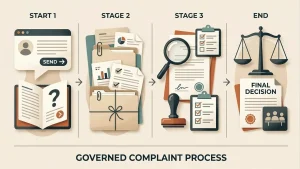
A licensed operator must provide an internal complaints process and access to an approved Alternative Dispute Resolution (ADR) service. Find the complaints policy before you need it. It should explain how to submit a complaint, what information to include, and how the operator will tell you about the next steps. Keep a copy of the terms and relevant messages, plus records of transactions or account activity connected to the issue.
Start by contacting the operator through its stated complaints route, rather than relying only on live chat or a social media exchange. Describe the problem clearly and keep the response. If the operator does not resolve the dispute, its policy should explain how you can take it to the named ADR provider and when that route is available. Check that the provider is approved, and follow the instructions in the policy; do not assume that a regulator will decide an individual payment or account dispute on your behalf.
Casino Sites Not on GamStop: A UK Guide
If the operator’s policy is hard to find, names no ADR provider, or gives instructions that conflict with the register or the company details on the site, treat that as a reason to stop and clarify matters. A complaints route is useful only if you can identify who is responsible and how to use it.
Make the check before you need it
Save the exact website address, the operator’s legal name, its UKGC Licence details and the complaints page. Recheck the register if you are redirected to another domain or the operator changes its branding. For a site described as a trusted casino, the practical test is not the wording of its advert: it is whether the current regulator record connects the business and the domain, and whether a clear route exists for challenging a decision.
This check is separate from judging a bonus, payment method or game. Those details cannot make an unverified regulatory claim reliable. If the site’s identity or complaint process remains unclear after you contact it, do not treat the uncertainty as a minor paperwork issue. Wait until you can establish which licensed business you would be dealing with.
Choosing Carefully Without Relying on a “Best” Label
A “best” or “most trusted” label is a claim, not evidence. A ranking can help you identify what a reviewer says it has assessed, but it cannot establish that a casino is authorised to serve you or that its terms suit you. Treat trust language as a prompt to check the underlying details, not as a substitute for them.
Attention: Labels such as "best" or "most trusted" are marketing claims and do not serve as evidence of legal authorisation or regulatory status.
For real-money gambling in England, Scotland and Wales, the operator needs a UKGC Licence. Look for a connection between the casino’s name, its operating company and the relevant entry on the Gambling Commission’s public register. A logo or licence number displayed on a site is not enough by itself: compare the details with the register, and make sure they relate to the brand and domain you are considering. A company name that differs from the casino’s brand may require closer checking rather than an assumption that the connection is genuine.
Dated checks described in affiliate reviews illustrate why the exact match matters. An affiliate review reported that a check of the public register on 26 September 2026 did not identify a LuckyPays entry under that brand or the stated domain, luckypays.io. Another such review reported that a check on 25 September 2026 found no operating-licence entry for Usoftgaming N.V. or Hustles Casino. These are time-specific reports, not permanent findings: register details can change, so check the current record yourself before deciding.
Terms deserve the same attention as a trust badge. Read the rules that affect deposits, withdrawals, account access and promotions before you commit money. Make sure the wording is clear about what the operator expects from you and what happens if a condition is not met. If important terms are difficult to locate, inconsistent across pages or unclear about which company is responsible, do not let a polished ranking settle the question for you.
VPN-Friendly Casinos in the UK: Rules and Risks
The phrase “trusted casino games” can also confuse the issue. A game’s name or presentation does not establish that the site offering it is licensed. Assess the operator and the account you would use, rather than treating a familiar game or a reviewer’s label as proof of oversight.
A careful choice does not require finding a list with the strongest-sounding claims. It means checking whether the operator’s regulatory status can be verified, whether the site’s terms are understandable, and whether the details you see refer to the same business. If those checks do not line up, pause rather than relying on a “best” badge to fill the gap.
Crypto Casinos: Check the Licence Before the Payment Method
A casino’s use of cryptocurrency does not establish that it is properly authorised to offer real-money gambling in Great Britain. The payment method and the operator’s regulatory status are separate questions. If an operator offers real-money gambling to customers in England, Scotland or Wales, it must hold a UKGC Licence. A polished payment page, a familiar coin name or a claim of fast transfers cannot take the place of that licence.
Start by identifying the business behind the casino, not just the brand shown on its homepage. Look for the operator’s legal name and licensing information, then check that the details relate to the site you are considering. A licence belonging to a different business, or a general statement that the casino is “regulated”, does not establish that the operator serving you holds the required UKGC Licence.
Licensing Risk
Acceptance of cryptocurrency does not replace the requirement for a UKGC Licence; using an unlicensed crypto casino in Great Britain is a significant risk.
This matters because branding and payment options can draw attention away from who is responsible for the gambling service. If you cannot connect the casino’s brand to a named operator and its UKGC Licence, do not treat cryptocurrency acceptance as reassurance. The key issue is whether the business offering real-money play to customers in Great Britain is licensed for that activity.
Be cautious with claims that present a crypto casino as trusted simply because it accepts digital currency or describes its payments as secure. Those statements concern how a site presents a payment option; they do not prove that the operator is licensed. Nor does a coin’s reputation establish anything about the casino’s accountability. Keep the assessment grounded in the operator and its licence.
You should also separate a casino’s licensing claim from its payment claims. One does not verify the other. Even where a site explains how it says a payment works, that explanation does not confirm that the casino is authorised to provide gambling in Great Britain. Check the licensing position first, before weighing any payment feature.
If a site makes its operator identity or licensing details difficult to understand, that is a reason to pause rather than fill in the gaps yourself. Do not assume that a licence held by a related company automatically covers the site in front of you. The relationship between the brand, the operating business and the licence needs to be clear.
Merkur Casino Online UK: Slots and Site Checks
A careful choice does not require you to decide whether cryptocurrency is a good payment option in general. It requires you to establish whether the particular operator is licensed to offer real-money gambling in the relevant part of Great Britain. Only then does it make sense to consider the payment method on its own terms. A crypto label cannot turn an unlicensed offer into a licensed one, and it cannot guarantee that a casino deserves your trust.
When a Casino’s Trust Record Needs a Closer Look
A UKGC Licence is an important safeguard, but it should not be mistaken for proof that an operator has never fallen short. Regulatory action can reveal problems in how a business treated customers, even when it operates within the licensing system. That distinction matters when you are weighing whether a casino deserves your trust: a licence tells you about its regulatory status, while enforcement history can show how it has met particular responsibilities.
Grace Media provides a documented example. On 26 June 2025, the Gambling Commission announced a £60,000 financial penalty against the company. The action concerned failures connected with self-exclusion and consent for direct electronic marketing. These are not abstract administrative details. Self-exclusion is intended to help someone stop gambling, while marketing consent concerns whether promotional messages are sent with the customer’s agreement.
The penalty does not establish that every casino associated with the company had the same problem, nor does it describe the conduct of every operator today. It does show why a company’s regulatory record deserves attention alongside the presence of a licence. A casino can be licensed and still have practices that attract enforcement; the existence of oversight is not a promise of a flawless record.
Regulatory Record
Financial penalties, such as the £60,000 fine against Grace Media on 26 June 2025, highlight that a licence is a regulatory status, not a guarantee of a flawless record.
A specialist casino review has reported that the Gambling Commission’s public register associates 333casino.com with Grace Media (Gibraltar) Limited, under account 57869, as a White Label domain. Treat that as a specific reported register entry, not as a general description of how casino brands are structured or as proof that every detail remains unchanged. Brand names, domains and business arrangements can change, so a historical or third-party description should not substitute for checking the current position.
The connection is relevant because a familiar casino name may not tell you which company sits behind the service. If a brand is presented as linked to a particular operator, consider whether that relationship is clearly stated and whether the operator’s public record gives you context. A penalty against a company is a reason to look more closely at the issue behind it, not a shortcut to a blanket verdict about every site or customer experience.
For anyone comparing trusted casinos in the UK, the useful question is not whether a brand can claim to be trusted. It is whether the evidence supports that claim, and whether any past regulatory finding relates to conduct that matters to you. Read enforcement information in context: note what the regulator said, which company it concerned and when the action occurred. That gives you a more grounded picture than treating a licence—or a reassuring label—as a guarantee.
Anjouan Casino Licence in the UK: What It Means
Bonuses, Free Spins and the Terms That Change Their Value
A bonus headline tells you little about what you must do before you can withdraw any resulting winnings. The conditions determine whether an offer is worth accepting, so read them before opting in or depositing. A trusted casino review can help you locate the relevant terms, but the operator’s own promotion rules are what you need to check.
Start with the wagering requirement. It sets the total amount you must stake, not the amount you need to win. A specialist review gives this illustration: a £20 bonus with 10x wagering requires £200 in total stakes. That distinction matters because meeting the requirement does not mean you will have money left to withdraw. Check whether wagering applies to the bonus, the deposit as well, or both, and whether any maximum cash-out condition applies.
Games may count differently towards wagering. A specialist review notes that slots can contribute the full stake, while live tables and blackjack may count at a lower rate or not at all. The promotion’s terms should state which games qualify and how each contributes. If you plan to play a particular type of game, confirm its contribution before accepting the offer; otherwise, you could make little progress towards the requirement.
Check expiry dates on both bonus funds and free spins. A specialist review describes offers with expiry periods ranging from 7 to 30 days, but the deadline for a particular promotion must be confirmed in its terms. Look for separate deadlines for claiming an offer, using spins and completing wagering. An expired reward may be removed, even if you have not finished using it.
Wagering Example
A £20 bonus with 10x wagering requires a total of £200 in stakes before winnings can be withdrawn. Note that different games contribute differently: slots may count fully, while live tables and blackjack may count at a lower rate or not at all.
Eligibility and payment conditions can also narrow an offer. A specialist review says welcome deals may be restricted to new customers, limited to one per household, or unavailable when using certain payment methods, including e-wallets. Confirm the exact rule for the promotion you are considering. Deposit and withdrawal availability are separate, so do not assume a payment method’s status for one transaction tells you whether it qualifies for a bonus.
You should also be able to control which promotions reach you and through which channels. Casinos must give customers more choice over promotion types and communication channels. Review those preferences rather than accepting messages you do not want.
Treat free spins as a promotion with conditions, not as cash. Check which game they apply to, when they expire and whether winnings from them carry wagering requirements. If the terms are unclear or difficult to find, you can decline the offer; the terms matter more than the advertised headline.
Before You Use a Casino App, Check the Same Account Rules
A casino app is another way to access an online gambling account, not a separate route around the rules. Before you can deposit or play, the operator must verify you. Installing an app or being able to open its games does not mean you have passed those checks.
Pay attention to when the app asks for information and what it lets you do before verification is complete. If it appears to accept a deposit or allow real-money play first, stop and contact the operator rather than assuming the app’s design makes this acceptable. Age must also be checked before an operator allows you to deposit.
Curaçao Casino Licence in the UK: Legal Position
Account controls matter on a small screen just as much as they do on a website. Before making a first deposit, a remote operator must prompt you to set a financial limit, and accessible account-level controls must let you manage limits. Check that you can find those settings in the app and understand how a change takes effect. Reductions apply immediately; increases have a cooling-off delay.
Consider how you will reach help if you have an account problem. An app may make play feel self-contained, but it does not replace the operator’s responsibilities or the protections attached to the account. Read the account information rather than relying on a short app description or a polished screen.
If you are comparing casino apps, treat “trusted” as a claim to test, not a feature that can be confirmed by appearance or ease of installation. The app itself does not establish that the account is properly controlled. Check the operator and its terms separately, then make sure the account’s verification and limit steps are clear before committing money. If a key control is difficult to locate, ask the operator how it works before you deposit.
Bitcoin and Dogecoin: What You Can and Cannot Verify
A casino’s mention of Bitcoin or Dogecoin does not establish that it accepts either coin, or that its real-money gambling is properly authorised. Payment claims can change, and a coin name by itself says nothing about who operates a site or which rules apply to it.
Attention: A site describing itself as a Bitcoin or Dogecoin casino does not automatically satisfy the legal requirement to hold a UKGC Licence for serving consumers in Great Britain.
For customers in England, Scotland and Wales, a business offering remote gambling must hold the relevant UKGC Licence, whether it is based in Britain or elsewhere. That requirement concerns the gambling service, not the currency used to pay. A site may describe itself as a Bitcoin or Dogecoin casino, but that label does not replace the licensing requirement.
Separate what you can check from what a site merely claims. A payment page may state that a coin is supported, but you still need to establish whether the operator named on the site is the one responsible for the gambling service and whether it is licensed for the British market. Do not treat a logo, wallet address or cryptocurrency branding as proof of regulatory status.
The same caution applies to claims of being a trusted Bitcoin casino or a trusted Dogecoin casino. Trust cannot be inferred from accepting a particular coin, and a polished payment page is not evidence of oversight. If the operator cannot be matched to a current UKGC Licence for service to Great Britain, the coin does not make the offer compliant.
Keep the question narrow: is the named operator authorised to provide the gambling service where you live, and is the payment claim clearly stated by that operator? Those checks do not establish that every transaction will be available or suitable for you. They help distinguish a verifiable regulatory claim from a marketing label.
Northern Ireland is not within the UK Gambling Commission’s remote-gambling remit in the same way as Great Britain. Do not assume that a British licensing statement settles the position there. Bitcoin and Dogecoin may be the feature that draws your attention, but the operator’s legal status is the more important thing to establish before considering any real-money play.
Non-UK-Registered Casinos: Regulation and Risks
Live Tables, E-Wallets and Withdrawal Timing
A live table can count differently from a slot when wagering conditions apply. A specialist review reported that slots contributed the full stake towards wagering, while live tables and blackjack could contribute a smaller amount or nothing. The operator’s promotion terms are the useful reference: check how each game contributes before you assume table play will move a wagering requirement along.
Payment options also need checking individually. Deposit and withdrawal availability are separate, so seeing an e-wallet offered for one does not establish that it can be used for the other. Nor does the presence of a familiar payment name, by itself, tell you whether a casino is trustworthy. Check the operator’s published withdrawal rules and any conditions attached to the method you intend to use.
Withdrawal timing can depend on the payment route and on the operator’s checks. A specialist review gave PayPal withdrawal estimates of four to six hours on weekdays, with eight to ten hours from Friday to Sunday. Treat those as reported timings, not a promise for every account or casino. A first withdrawal may take longer: a specialist review noted an additional twelve to twenty-four hours for document checks. If identity or payment-ownership questions arise, processing may not follow the stated estimate.
Bank transfers can also involve a charge. A specialist review reported possible fees of £2–£5, depending on the customer’s bank policy. Check the terms and your bank’s own charges before choosing that route; the operator’s processing time and the bank’s handling are not necessarily the same stage.
Before playing, look for the withdrawal method, any stated processing estimate, possible fees and conditions that could delay release. If the terms are unclear, ask the operator to explain them before you deposit. A payment method can be convenient without making the full withdrawal process predictable, so base your decision on the specific conditions rather than a general claim about speed.
Which casino payment methods are generally quickest?
PayPal withdrawals are typically quickest, clearing in about 4–6 hours on weekdays and 8–10 hours from Friday to Sunday. Debit card withdrawals usually take 2–3 banking days after review.
Where can I find responsible gambling tools?
UK Gambling Commission-regulated operators in Great Britain must participate in GAMSTOP. You can also call the National Gambling Helpline on 0808 8020 133, available 24 hours a day.
Is LeoVegas UK licensed?
Yes. The Gambling Commission lists LeoVegas Gaming PLC under account number 39198 and identifies leovegas.co.uk as its active UK-facing domain.
Material created by the team LottoGo