

The guide explains what foreign status means under UK rules and how licensing, safeguards, payments and bonus conditions may differ.
What “Foreign Casino” Means in the UK
In the UK gambling market, a “foreign casino” generally means an online gambling operator that accepts customers in Britain but does not hold a licence from the UK Gambling Commission (UKGC). The term describes the operator’s position in relation to British regulation; it does not, by itself, tell you where the company is based or whether it holds a licence elsewhere.
That distinction matters. A company may be located overseas and hold a licence from another jurisdiction, but that licence is not a UKGC licence. Conversely, the label “foreign” is not a formal category that establishes an operator’s legal status. The relevant question for the British market is whether it has the UKGC licence required to provide gambling services to customers in England, Scotland and Wales.
Under the rules governing those parts of the UK, an operator must hold the appropriate Gambling Commission licence to offer online gambling to customers there. Providing gambling facilities to British customers without that licence is unlawful for the operator. Advertising those services in the UK without the required licence is also unlawful. This concerns what a business may do in the market, not whether an individual customer commits an offence by placing a bet.
Choosing a foreign casino as a UK player calls for a careful look at the details available to you. This list highlights the stated payout speed for each operator.
1. NightLuck
Payout speed: 1-3 business days NightLuck lists a payout speed of 1–3 business days. That gives you a stated timeframe to consider.
2. Dieselwin
Payout speed: 1-3 business days Dieselwin lists a payout speed of 1–3 business days. You can use this stated timeframe when weighing your options.
3. SlotoSport
Payout speed: 1-3 business days SlotoSport lists a payout speed of 1–3 business days. This is the available payment-timing detail for you to consider.
4. Britsino
Payout speed: 1-3 business days Britsino lists a payout speed of 1–3 business days. You have a stated timeframe to refer to when considering it.
5. WinBeast
Payout speed: 1-3 business days WinBeast lists a payout speed of 1–3 business days. This gives you a specific stated timeframe for payouts.
6. NightWin
Payout speed: 1-3 business days NightWin lists a payout speed of 1–3 business days. You can take this stated timeframe into account.
7. BeOnBet
Payout speed: 1-3 business days BeOnBet lists a payout speed of 1–3 business days. This is a clear payment-timing detail for you to consider.
8. Revery Play
Payout speed: 1-3 business days Revery Play lists a payout speed of 1–3 business days. You can refer to this stated timeframe when assessing the operator.
9. Jetsetspins
Payout speed: 1-3 business days Jetsetspins lists a payout speed of 1–3 business days. This provides you with a stated payout timeframe.
10. Amunbet
Payout speed: 1-3 business days Amunbet lists a payout speed of 1–3 business days. You can consider this stated timeframe as part of your choice.
For a player, the legal position is different. There is no UK law that makes it a criminal offence for a person to place bets with an overseas operator, and the player does not face a criminal penalty simply for using a casino licensed outside the UK. So the phrase “foreign casino” should not be read as meaning that the customer is breaking the law by playing there. The legal restriction described above applies to the operator’s provision and promotion of services, not to the act of betting by an individual.
This difference can be easy to miss because the same website involves two separate parties. The operator is the business offering gambling facilities; the player is the person choosing whether to use them. A site can therefore be available to a British customer while still lacking permission to serve the British market. Being able to open an account, see games or place a bet does not change the operator’s licensing position.
“Foreign casino” is also not a promise about the standards or protections available to you. The word does not certify that the business is authorised in Britain, nor does it mean that an overseas licence has the same effect as a UKGC licence. It is simply a useful shorthand for an operator outside the UKGC system that takes British customers. The details behind that description can differ from one business to another.
USA Casinos for UK Players: What to Check
When people look for the best foreign casinos in the UK, they may be using “best” to mean different things: a site they can access, one that lists a particular payment option, or one that advertises a bonus. Those features do not answer the legal question. Nor does an operator’s location alone. For a clear description, separate three points: where the business is based, whether it holds a UKGC licence, and whether it accepts customers in Britain.
The central distinction is therefore straightforward. A foreign casino, as the term is used here, is an online operator serving British customers without a UK Gambling Commission licence. The operator’s ability to offer those services in England, Scotland and Wales is subject to UK licensing law; a player is not criminally liable simply for betting with an overseas operator. Keeping those positions separate helps prevent a common misunderstanding: that a customer’s lack of criminal liability makes the operator authorised to serve the market.
How to Read Claims About Casinos Accepting UK Players
A casino website may load in Britain, display games and allow you to create an account. None of those steps establishes that the operator is authorised to offer gambling to customers in Great Britain. Access describes what you can reach; authorisation describes whether the operator may lawfully serve the market.
Technical access to a website—such as the ability to load the page or create an account—is not proof that the operator is lawfully authorised to serve the British market.
That distinction matters when you see claims about foreign casinos accepting UK players. A site may use phrases such as “available to UK players” or allow a British address during registration. Those are statements about its own access or sign-up process, not proof that it holds the permission required to serve customers in Britain. The same applies if the site accepts a deposit or lets you place a bet: the fact that a transaction went through does not settle the operator’s legal position.
The rules apply to operators, not just to the place where a company is based. Remote gambling businesses offering services to customers in England, Scotland and Wales must hold a Gambling Commission licence, regardless of where they are located. An operator licensed elsewhere does not become UK-authorised simply because its site can be opened from a British internet connection. Conversely, the legal restriction is on an unlicensed operator offering gambling services here; a player does not face a criminal penalty merely for placing a bet with an overseas operator.
A site being reachable is not evidence of permission
Access can be affected by settings on the operator’s side, as well as by choices made by the person visiting the site. A block may be in place, absent, or not enforced. A report by gambling.com says some casinos licensed outside the UK are expected to block British visitors, while some do not apply that restriction; it also reports that a basic VPN can be used to get around a block. This is a report about access, not a reliable test of the operator’s status or a recommendation to bypass restrictions.
Casino App UK Guide: Apps, Browsers and Mobile Play
A page that opens normally can therefore create a misleading impression. So can a sign-up form that accepts a British postcode, or a customer-service reply saying that British customers are welcome. Such details show what the site permits in practice, but do not demonstrate that it is entitled to provide gambling facilities to people in Britain.
The reverse can also happen: a site may restrict access without explaining the reason clearly. An error message or a blocked registration does not, by itself, tell you what licence the operator holds. In either direction, technical access is a poor substitute for establishing who is offering the service and under what authority. That distinction is especially important when promotional pages describe non-UK casinos accepting UK players as though availability were the same as approval.
The practical risk if a payout is refused
The consequences of a dispute can be more serious than a failed sign-up. A report by gambling.com says that some unlicensed sites have refused to pay customers’ winnings, leaving those customers without legal recourse. That does not mean every overseas operator will withhold a payout, but it does show why a promise on a website is not the same as an enforceable protection.
If an operator disputes a withdrawal, you may find that the ordinary routes available against a locally authorised business do not apply in the same way. A customer may have little practical leverage if the operator is outside the UK regulatory system and the dispute cannot be resolved through a UK-based process. The risk is not only whether a site accepts a bet; it is what options remain if the operator later declines to honour a balance or applies its own interpretation of its terms.
Payout Risks
Some unlicensed sites have refused to pay customers’ winnings, leaving those players without legal recourse because the operator sits outside the UK regulatory system.
Keep that distinction in mind when reading claims about “best” foreign online casinos accepting UK players. A list or review may describe a site as accessible, popular or open to British registrations. Those labels do not establish that it is permitted to serve the market, and they do not guarantee that a payout dispute will be resolved in your favour. Nor should a successful deposit be taken as evidence that any later withdrawal will be straightforward.
Before treating an access claim as meaningful, separate three questions: can you reach the website, will it let you register, and is the operator authorised to provide gambling services in Britain? The first two are matters of practical access. The third concerns the operator’s legal position. Confusing them can make an offshore site appear safer or more established than the information actually shows.
For you, the central point is simple: a website’s willingness to accept a British visitor is not proof of permission to operate here. If an unlicensed operator later refuses to pay, the customer may have no effective legal recourse, as gambling.com has reported in some cases. Treat claims of availability as claims about access only, not as assurance that the operator is authorised or that a dispute will have a dependable remedy.
Gibraltar Casino Licence UK: Legal Status and Checks
Checking the Licence and the Limits of Offshore Oversight
A licence displayed on a casino website can tell you that an operator claims oversight somewhere; it does not mean that the operator is regulated by the UK Gambling Commission. Offshore casinos sit outside the UKGC system. A licence issued by another authority is not a substitute for a UK operating licence, and it does not give the UKGC responsibility for supervising that operator.
This distinction matters when you assess claims about foreign casino sites. A badge, licence number or reference to a regulator may look reassuring, but the useful question is what the stated licence actually covers. Check the named legal entity, the regulator and whether the licence can be confirmed through that regulator’s own information. Then compare those details with the company named in the casino’s terms. A mismatch between the website brand and the licensed entity can make it harder to understand who is responsible for the service.
A specialist review may describe offshore platforms as licensed and regulated by reputable authorities. That is a claim about the existence or standing of an overseas licence, not proof that the site meets UKGC requirements. “Reputable” is not a regulatory category, and the label alone does not tell you what rules apply, how complaints are handled or what action the regulator can take. Those questions depend on the authority and the scope of its oversight.
An overseas licence does not provide the same complaint processes, remedies, or enforcement options available through the UK Gambling Commission system.
The same care applies to statements about security. Some non-GamStop casinos describe measures such as encryption to protect personal and financial information. Encryption can help protect data as it moves between a user and a website, but it does not establish that an operator is licensed in Britain, that its games are fair, or that a complaint will be resolved in your favour. Technical safeguards and regulatory supervision are different things. One cannot stand in for the other.
You may also see general assurances that a casino complies with the laws and guidelines of its licensing jurisdiction. Treat that as a statement to verify, rather than as evidence of UK protection. A foreign regulator’s rules apply within its own remit; they do not turn the operator into a UKGC-licensed business. Nor does the presence of an overseas licence make the operator subject to UKGC enforcement.
That difference affects the practical value of a licence if something goes wrong. With a UKGC-licensed operator, the UK regulator has a defined role in supervising the business under British rules. An offshore licence does not create that same route to UKGC oversight. You should not assume that a regulator abroad can offer the same complaint process, remedies or enforcement options available through the British system. Before relying on a licence as reassurance, find out which authority issued it and what recourse it says is available to customers.
A licence claim should also be separated from a claim about player protection. Offshore operators do not provide UKGC-mandated affordability checks. A site may have its own account controls or responsible-gambling statements, but those are not evidence that UK rules apply. If you are relying on protections required of British-licensed operators, an overseas licence does not supply them.
Merkur Casino Online UK: Slots and Site Checks
For a careful review, read the licence information alongside the terms and privacy policy. Look for the operator’s legal name, the regulator it identifies, and a clear explanation of which company runs the account and handles customer complaints. If the site gives only a seal without enough information to identify the licensee, you have little basis for assessing the claim. If the documents name different entities without explaining their roles, do not treat the badge as a complete answer.
The aim is not to decide that every overseas regulator is ineffective, or that every security statement is false. It is to avoid confusing one kind of assurance with another. A casino can describe security technology and cite a licence abroad while still being outside UKGC regulation. For British players, those facts must be kept distinct: offshore oversight, whatever its scope, is not UK oversight.
What Changes When You Play at an Online Casino Based Abroad
The practical difference is not simply where a casino’s website or company is located. A foreign operator serving British customers without a UK Gambling Commission licence sits outside the UK regulatory system. That affects which safeguards apply to the account and what standards you can expect the operator to follow. Offshore casinos are not regulated by the UKGC, so they should not be treated as equivalent to UK-licensed sites.
A British player is not criminally liable merely for playing with an overseas operator. That does not make the arrangement the same as using a UK-licensed casino: the operator’s regulatory obligations are different, and protections established for the British market may not follow you there.
Regulatory Difference
Offshore casinos are not regulated by the UKGC, meaning British-specific protections and safeguards do not apply.
UK-specific safeguards may not apply
UKGC rules are designed for operators licensed to serve customers in Great Britain. When an operator is outside that system, you should not assume that a familiar-looking website provides the same safeguards. In particular, offshore operators do not offer UKGC-mandated affordability checks. A site may describe its own safety measures, but those descriptions do not make it subject to the Commission’s requirements.
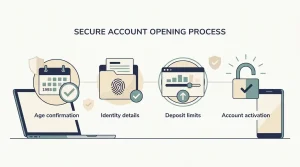
Age verification is required before an operator allows a customer to deposit. Identity checks can also affect how an account is handled. At UKGC-licensed casinos, operators must verify a player’s identity before processing a withdrawal. That requirement gives you a clear expectation when playing at a licensed site. With a foreign casino, you should not assume that the same UKGC rule governs its process; check the operator’s own terms for what documents it may request and when.
This distinction can matter when you need to access your balance. A request for documents, a query about account details or a disagreement about the operator’s terms can become harder to resolve when the company is outside the UK system. It is sensible to understand the operator’s procedures before putting money into an account, rather than discovering them only when you want to withdraw.
Self-exclusion does not transfer automatically
GamStop applies to UKGC-licensed operators. If you have registered with the scheme, you are excluded from every UK-licensed gambling site covered by it. Foreign casinos operating outside the UKGC’s remit are not subject to GamStop, so the exclusion does not automatically block access to them.
Mobile casino pay by phone credit in the UK
That is an important practical limit for anyone who has self-excluded. An overseas account is not a continuation of the same protection, and the existence of a self-exclusion scheme in Britain does not mean an offshore operator will check or honour it. If you have used GamStop to stop gambling, treating a foreign site as an alternative can undermine the boundary you put in place. The point is not whether the site is easy to reach; it is that the safeguard does not carry over.
Tax treatment is not the same as regulation
A different operator location does not change the UK tax treatment of gambling winnings. Gambling winnings are not subject to income tax in the UK, whether the casino is UKGC-licensed or not. That tax position should not be confused with regulatory protection: a tax rule does not bring an overseas operator under UKGC oversight or give you the safeguards that apply at a British-licensed site.
Likewise, a casino’s use of familiar payment options, games or account features does not establish that it follows UK rules. The appearance of a service can feel similar while the regulatory relationship is not. What matters is whether the operator holds the relevant UKGC licence, not whether its site looks designed for British customers.
Do
- Check the operator’s own terms for identity verification
- Read account and withdrawal rules before depositing
- Verify the operator’s legal name and regulator
Don’t
- Assume UKGC-mandated affordability checks apply
- Treat a familiar website design as proof of regulation
- Rely on a general claim of security as a regulatory guarantee
Consider the difference before relying on a safeguard
When comparing a UK-licensed casino with a foreign online casino, focus on what protection you are relying on. A UKGC licence places the operator within the British regulatory framework. An offshore operator is outside that framework, and UK-specific requirements—including affordability safeguards and GamStop coverage—should not be assumed to apply.
Read the account and withdrawal terms carefully, especially the sections on verification, document requests and account restrictions. Those details help you understand what the operator says it may require, but they do not replace UKGC regulation. If a safeguard is essential to you, confirm that it actually applies to the operator rather than relying on a general claim about security or responsible gambling.
The same caution applies to broad labels such as “safe” or “trusted”. They do not tell you whether the operator is regulated by the UKGC, whether your self-exclusion applies, or which identity checks will be required before a withdrawal. For British players, those are distinct questions. An overseas casino may offer access to online gambling, but it does so outside the system that governs licensed operators in Great Britain.
Before You Choose a Casino for UK Play
Before depositing, establish what kind of operator you are dealing with and what that means for you. A casino licensed offshore is not regulated by the UK Gambling Commission, even if its website is easy to use from Britain or its marketing is aimed at British players. A foreign licence does not bring the protections and oversight attached to a UKGC licence.
Non-UK-Regulated Casinos: UK Rules and Risks
The legal position is not the same for the operator and the player. Providing gambling services to customers in Great Britain without the required UKGC licence is unlawful for the operator. A British player, however, does not commit an offence merely by placing a bet with an overseas casino. That distinction matters: the absence of a criminal penalty for you does not make the operator subject to UK rules or give you the same routes for help if a dispute arises.
Before you create an account, look beyond the welcome message and ask yourself:
- Can you identify the operator? Find the company named in the site’s terms, rather than relying only on the casino’s brand. Check that its stated licensing information is clear and consistent across the site.
- Do you understand the limits of that licence? A licence from another jurisdiction is not a UKGC licence. It does not mean the UK Gambling Commission supervises the casino or can apply its rules to the operator.
- What would you do if a withdrawal were disputed? Read the terms on account closure, verification and complaints before money is involved. Consider whether you understand who would handle a complaint and what practical options you would have if the operator did not resolve it.
- Can you afford to lose the deposit? Treat money sent to an offshore operator as money you may not be able to recover quickly, or at all. Do not deposit funds needed for bills or other essentials.
This is not a claim that every offshore casino will withhold winnings. But gambling.com has reported cases in which unlicensed sites refused to pay customers, leaving them without legal recourse. That possibility is worth weighing before you deposit, rather than after a disagreement has begun.
A careful review of a site’s terms can help you understand its stated rules, but it cannot turn those rules into UKGC protections. Nor should a polished website or claims about security be treated as proof that the operator is accountable under British gambling regulation. The key question is not simply whether the site looks professional; it is whether you are willing to accept the weaker practical position that comes with dealing outside the UKGC system.
Remember, too, that offshore operators do not provide UKGC-mandated affordability checks. Those checks are part of the UK regulatory framework, not a safeguard you can assume will follow you to a non-UK casino. If you rely on external limits or other controls to keep gambling within safe boundaries, consider whether the operator offers measures you understand and can use before opening an account.
Before Creating Account
- Identify the legal entity named in the terms
- Verify if the operator holds a UKGC licence
- Review the process for handling withdrawal disputes
- Confirm whether you can afford to lose the deposit
- Check if the operator offers usable account controls
There is no need to make a decision under pressure from a time-limited offer. Pause, read the operator’s terms, and decide whether its status and the possible consequences of a dispute are acceptable to you. If they are unclear, waiting is safer than depositing first and trying to resolve the uncertainty later.
Overseas Access Is Not the Same as UK Authorisation
A casino’s website opening in your browser does not establish that the operator is authorised to provide gambling services in Britain. Access is a technical matter; authorisation is a legal one. An overseas site may accept a registration or display its games to someone in the UK, but that does not give it permission to serve British customers.
For operators, the distinction matters. Providing gambling facilities to customers in England, Scotland or Wales without a UK Gambling Commission licence is illegal, as is advertising those services in the UK. An overseas licence does not replace the required British licence. Offshore casinos are outside UKGC regulation, so they are not subject to UKGC enforcement or its required affordability checks.
Some casinos licensed outside the UK are intended to block visitors from Britain. A report by gambling.com says that some do not enforce that block, and that users may bypass it with a basic VPN. This is a report about access practices, not proof that a reachable site is authorised or that its terms allow UK customers. A change in what you can see on screen does not change the operator’s licensing position.
If you are considering a site because it appears among overseas casinos accepting UK players, treat that phrase as a description of access, not a regulatory status. The same applies to non-UK casino sites that let you create an account or proceed towards a deposit: those steps do not amount to permission to operate in Britain. Nor does the absence of a block confirm that the operator has assessed your location or is entitled to serve you.
Using a VPN to bypass blocks or the fact that a site allows British registrations are matters of technical access, not evidence of legal authorisation to operate in the UK.
The practical point is simple: do not use a site’s availability as evidence of approval. Look for clear information about who operates it and whether it holds the relevant UKGC licence. If it does not, it is not regulated by the UKGC, and UKGC-mandated affordability checks do not apply. That distinction remains important even when the site is easy to reach.
Payments and Withdrawals: Timing Depends on the Method and Operator
When comparing online foreign casino sites available to UK players, look beyond the payment logo. The time quoted for a withdrawal may cover only the operator’s processing or only the payment provider’s part of the journey. The terms should make clear when a request is reviewed, whether it can remain pending, and what verification is required. Those rules vary between operators, so a fast method does not guarantee a fast payout.
E-wallets such as Skrill and Neteller are reported as a relatively quick route: most foreign casinos process these withdrawals within 24 hours, and many do so in under 12 hours. That is the operator’s stated or reported processing time, not a promise that funds will appear in your wallet at precisely that point. Check whether the casino counts the period from submitting a request or from approving it.
Bank transfers can take longer. A specialist review describes them as the slowest option, often taking five to seven business days, with some foreign casinos adding their own processing delay before the banking timeline begins. Read the withdrawal terms for both stages rather than relying on a single headline estimate. A request marked as pending may not yet have reached your bank.
Crypto withdrawals are described in specialist reviews as often clearing in under an hour, faster than fiat methods. That speed comes with a different risk: the value of the cryptocurrency can move while you hold or convert it. Consider whether that volatility matters to the amount you expect to receive; a quick transfer does not remove it.
Before depositing, check the minimum and maximum withdrawal conditions, any pending period, and whether the payment route must match the one used to fund the account. These details differ by operator, and the practical value of a rapid payout estimate depends on them.
Foreign casinos are not regulated by the UK Gambling Commission and do not provide UKGC-mandated affordability checks. A withdrawal timetable is not a substitute for those protections. If an operator delays or disputes a payment, its own terms and processes matter; do not treat an advertised speed as assurance that a withdrawal will be approved.
A Conflict of Interest Behind One Offshore Betting Arrangement
A commercial link can be relevant when you are assessing an offshore gambling brand, even if it is not visible on the site’s front page. The Santeda–SIS arrangement illustrates why the terms behind such links matter.
Under their contract, SIS received a percentage of revenue generated by losing bets placed through Santeda’s brands. That means SIS’s income was connected to losses made by customers using those brands. It is a specific financial arrangement, not simply a link between two companies with no shared commercial interest.
The Santeda–SIS Arrangement
Under this specific commercial contract, SIS received a percentage of revenue from losing bets placed through Santeda’s brands, linking SIS’s income to customer losses.
This does not, by itself, establish how any individual bet was handled or show that every offshore operator has a similar agreement. It does give you a reason to look beyond a brand name when considering who is involved and how the relationship is structured. A familiar industry name connected to a gambling brand does not necessarily mean that the brand operates under British oversight.
Santeda’s Curaçao licence does not permit it to operate in the UK or the US. The existence of a licence elsewhere therefore does not change the scope of that licence or authorise Santeda to serve customers in those markets.
For a UK reader, the useful distinction is between a commercial connection and permission to operate in Britain. The SIS revenue arrangement describes the former; Santeda’s Curaçao licence does not provide the latter. Neither detail should be treated as proof that other offshore brands have the same contractual terms.
GamStop and Overseas Casinos: A Safeguard That Does Not Carry Over
GamStop is designed to exclude you from gambling with every operator licensed by the UK Gambling Commission. Once you register, that exclusion applies across UK-licensed sites; it is not a separate request you need to make with each operator.
The boundary matters if you are considering an overseas casino. Operators outside the UKGC system are not covered by GamStop, so your registration will not block access to them. They are also not subject to UKGC-mandated affordability checks. A non-GamStop site is therefore not an alternative way to keep the same exclusion in place.
A specialist review reports that someone who has self-excluded may be able to register with a foreign casino and deposit quickly, without the safeguards attached to UK-licensed play. Treat that possibility as a practical risk, not as evidence that the site will offer equivalent support or controls. Offshore casinos are not regulated by the UKGC, and GamStop cannot enforce your exclusion there.
Casino Types & Safety: UK Licensing and Access
If you chose self-exclusion because gambling had become difficult to control, the gap in coverage deserves particular care. Avoid relying on the assumption that a GamStop registration will prevent you from opening an account elsewhere. Consider using additional blocking tools and seeking support before taking any step that could give you access to gambling again. A safeguard only works within its scope, and an overseas operator sits outside this one.
Bonuses at Non-UK Casinos: Read the Wagering Terms First
Promotions at non-UK casinos accepting British players may include deposit matches, free-spins packages, no-deposit offers and cashback. A specialist review describes foreign welcome packages as larger in some cases, linking this to operators not being bound by UK Gambling Commission rules on bonus terms, wagering requirements and promotional language. That is a reported comparison, not a reason to assume a particular offer is generous or good value.
The key figure is the wagering requirement: it sets how much you must stake on qualifying bets before bonus funds can become withdrawable. For instance, a specialist review gives the example of a £100 match bonus with a 35x requirement. The calculation is £100 multiplied by 35, so you would need £3,500 in qualifying bets before the bonus funds convert to cash you can withdraw. That is the required betting turnover, not a promise that you will retain your balance or make a profit.
Before accepting an offer, read how the operator defines qualifying bets and whether the requirement applies to the bonus alone or another amount. Check the full terms rather than relying on the headline bonus value; a large offer can come with a substantial turnover condition.
Remember that offshore casinos are not regulated by the UK Gambling Commission and do not provide UKGC-mandated affordability checks. A bonus does not change those limits or provide UKGC protections. If the terms are unclear, declining the promotion avoids taking on a wagering condition you cannot confidently assess.
Are foreign casinos safe for UK players to use?
Not necessarily: an overseas licence does not provide the same protection as a UKGC licence, and some unlicensed sites have refused to pay winnings. Some platforms use encryption and are licensed by other authorities, but that does not make them authorised to serve customers in Great Britain.
Can I play at a casino licensed outside the UK?
Yes, placing bets with an overseas operator is not a criminal offence for you. However, a licence from another jurisdiction does not authorise that operator to offer gambling to customers in Great Britain.
What does a wagering requirement actually mean in practice?
It is the amount you must bet on qualifying games before bonus funds can be withdrawn. For example, a 35x requirement on a £20 bonus means £700 in qualifying bets; on a £100 bonus, it means £3,500.
Is playing at an international casino legal for UK residents?
Yes, you do not commit a criminal offence simply by betting with an overseas casino. The licensing rule applies to the operator: offering gambling to customers in England, Scotland and Wales without a UKGC licence is unlawful.
What should players check to assess whether an international casino is safe?
Check whether the operator holds a UKGC licence; a licence from another jurisdiction does not permit it to serve customers in Great Britain. Also check what regulator licenses it and whether it uses encryption, while remembering that these features do not guarantee that winnings will be paid.
Is it legal for UK residents to use casino sites that operate outside the UK’s licensing framework?
Using such a site is not a criminal offence for you. But an operator without a UKGC licence may not lawfully provide gambling facilities to customers in England, Scotland and Wales or advertise those services in the UK.
Material created by the team LottoGo