

GamStop applies to participating licensed operators, while a European location or branding does not establish a site’s status or available protections.
What GamStop Covers—and What It Does Not
GamStop is Great Britain’s national online self-exclusion scheme. It is designed to block a person who has registered from accessing gambling accounts across participating licensed websites and apps. Players can use it to exclude themselves from UK-licensed online casinos, as well as other participating online gambling operators.
That scope is specific. GamStop is a multi-operator scheme, but “multi-operator” does not mean that it covers every gambling business in Europe. Its coverage relates to participating licensed online operators, not to a casino’s continent, branding or use of the word “European”.
This distinction matters when you encounter descriptions such as “European casinos not on GamStop”. Europe is not a single gambling jurisdiction with one shared self-exclusion register. A site being based in, or describing itself as European does not by itself establish whether it participates in GamStop. Nor does the phrase “not on GamStop” tell you, on its own, what rules apply to that operator or what protections are available to you.
The same caution applies to searches for a European casino not on GamStop or for non-GamStop European casino sites. These labels describe an apparent relationship with one scheme; they are not a reliable assessment of a site’s overall status. The relevant distinction is whether the operator is among those covered by GamStop, rather than whether its website calls it European or presents itself as outside the scheme.
If you’re researching non-GamStop European casinos for 2026, payout timing is one practical detail to consider. Use this list as a starting point and check each casino’s terms before deciding where to play.
1. NightLuck
Payout speed: 1-3 business days NightLuck lists a payout speed of 1–3 business days, which gives you a stated timeframe to consider when reviewing its payment terms.
2. Dieselwin
Payout speed: 1-3 business days Dieselwin lists a payout speed of 1–3 business days. You can use this as a reference point when checking the details of its withdrawal process.
3. SlotoSport
Payout speed: 1-3 business days SlotoSport lists payouts as taking 1–3 business days. Keep that stated timeframe in mind as you review its terms.
4. Britsino
Payout speed: 1-3 business days Britsino lists a payout speed of 1–3 business days. This gives you a stated timeframe to check against its payment terms.
5. WinBeast
Payout speed: 1-3 business days WinBeast lists a payout speed of 1–3 business days. You can factor that timeframe into your review of its withdrawal information.
6. NightWin
Payout speed: 1-3 business days NightWin lists payouts as taking 1–3 business days. Review the casino’s terms for further details before you make a decision.
7. BeOnBet
Payout speed: 1-3 business days BeOnBet lists a payout speed of 1–3 business days. That stated timeframe is one detail for you to consider when checking its payment terms.
8. Revery Play
Payout speed: 1-3 business days Revery Play lists a payout speed of 1–3 business days. You can use this information as a starting point when reviewing its withdrawal terms.
9. Jetsetspins
Payout speed: 1-3 business days Jetsetspins lists payouts as taking 1–3 business days. Check its terms to understand the details behind that stated timeframe.
10. Amunbet
Payout speed: 1-3 business days Amunbet lists a payout speed of 1–3 business days. Consider this stated timeframe alongside the payment terms when assessing the casino.
If you have registered with GamStop, its purpose is to prevent access across the participating online gambling sites and apps within its scope. It should not be understood as a universal block on every casino website that might be accessible from Europe. That limit does not change what the exclusion covers: the participating operators remain subject to the scheme’s block.
“Non-GamStop European casinos 2026” is therefore not a single, clearly defined category. The wording can bring together sites with different locations and arrangements, while saying little about whether they are covered by the Great Britain scheme. A claim that a casino is outside GamStop should not be treated as proof that it is safe, suitable or free of other obligations.
The practical point is to keep the terms separate: GamStop is a Great Britain-wide online self-exclusion scheme covering participating licensed websites and apps; “European casino” is a broad description, not a statement of GamStop participation. If you are relying on an active self-exclusion, do not assume that a change in a site’s country description or branding changes the scope of your agreement.
How Online Self-Exclusion Works
Self-exclusion is a formal step: you ask a gambling business, or a multi-operator scheme, to prevent you from gambling for a period you choose. For online gambling, you can register with GamStop or contact an individual casino directly. Gambling businesses are required to offer self-exclusion, so look for the option in the site’s responsible-gambling information or ask customer services how to start.
Before registering, decide which accounts and places you need covered. A single-operator request applies to the business you contact; a request through a multi-operator scheme is a separate route. If an online European casino is among the places where you might gamble, do not assume that its location or description tells you which process applies. Check the operator’s own self-exclusion instructions and the scheme’s registration details, and make sure you understand which accounts the request is intended to cover.
Prepare to identify yourself
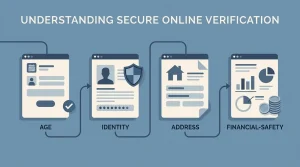
The registration process needs enough personal information to confirm that the request is yours. Follow the form or the instructions given by the scheme or casino, and enter your details accurately. Identity information is used to match your request with your gambling account or accounts. If information is missing or does not match, the provider may not be able to confirm your identity and complete the process as intended.
Use the contact details associated with your account where the instructions ask for them, and check your entries before submitting. If you have more than one account with the same business, make the scope clear when you contact it. Do not assume that closing one account or simply stopping visits is the same as making a self-exclusion request.
Self-Exclusion Process
Step 1: Identify targets
Decide which specific accounts and gambling businesses you need to be covered by the exclusion.
Step 2: Provide identification
Follow the instructions from the casino or scheme and enter your personal details accurately to match your account.
Step 3: Select duration
Choose how long the exclusion should last from the available options before confirming the request.
Step 4: Confirm and record
Complete the identity-confirmation steps and keep a record of the confirmation received.
For one online gambling operator, you can use its self-exclusion instructions or contact customer services if you cannot find them. For exclusion through GamStop, register directly with the scheme. GAMSTOP ONLINE allows a player to request self-exclusion from online gambling operators through one registration. These are different routes, so choose the one that fits the coverage you are seeking rather than treating a request to one casino as a request to every business.
Choose the duration and submit
During registration, you will be asked to choose how long the exclusion should last from the options offered. Consider this choice carefully before confirming it. Self-exclusion is not just a reminder to take a break; it is an agreement intended to stop you gambling with the businesses covered by the request for the selected period.
Read the registration instructions before you submit. Check that you understand the duration selected, the accounts or operators covered, and any information the process asks you to provide. If a point is unclear, contact the scheme or casino before completing the request. Do not rely on a general description of an online casino or on assumptions about what “European” means to determine whether an exclusion request will reach it.
After you submit, follow any identity-confirmation steps shown. Keep a record of the confirmation you receive, along with the date and the details of the request. Confirmation gives you something to refer to if you later need to check what you selected or contact the provider about the registration. If you do not receive confirmation, or if the information in it appears wrong, contact the organisation handling the request rather than assuming the exclusion is in place.
Anjouan Casino Licence in the UK: What It Means
Treat the request as a commitment
Once you have made the request, do not open another account elsewhere to get around it. A different account or a different kind of casino does not change the decision you made, and gambling at a non-GamStop casino could breach the terms of your self-exclusion. If you are tempted to gamble in more than one place, identify those places when deciding where to seek exclusion; a request to a single operator does not automatically mean that every other gambling business is included.
Keep the confirmation accessible and use the contact route provided if you need to ask about the status or scope of your registration. If you are unsure whether a particular site is covered, ask the scheme or the operator directly. That is safer than relying on the site’s location, branding, or the phrase “European online casino” to infer how your exclusion works.
What UK Players Should Check Before Gambling Online
The word “European” describes a site’s location or market, not whether it is authorised to offer gambling to people in Britain. If you are in England, Scotland or Wales, a remote operator serving you must hold the relevant licence from the UK Gambling Commission. A foreign address or a claim to accept UK customers does not replace that requirement. Northern Ireland has a different legal framework.
UK Operator Verification
- Confirm the operator holds a current UK Gambling Commission licence.
- Verify the licence on the regulator’s public register.
- Check for available responsible-gambling controls.
- Ensure there is a clear internal complaints process and ADR service.
- Confirm the site does not accept credit cards for gambling.
Before creating an account, check that the operator’s UK Gambling Commission licence is current and applies to the gambling service being offered. The regulator’s public register is the place to confirm this. A site that is outside the UK licensing system does not provide the protections attached to a UKGC-licensed operator, even if it describes itself as a European casino for UK players.
UK-licensed online casinos must provide self-exclusion tools, and participation in GamStop is compulsory for online operators. The Gambling Commission introduced that requirement on 31 March 2020. In practice, a UK-regulated casino must block a customer who has an active GamStop exclusion; moving between regulated operators is not a way around it.
You should also expect an operator to verify your age before allowing you to deposit. UK gambling is for adults aged 18 and over, and a site’s acceptance of your registration is not proof that it has met its obligations. Look for responsible-gambling controls and clear information about how to raise a complaint. UKGC-licensed casinos must have an internal complaints process and provide access to an approved Alternative Dispute Resolution service if a dispute remains unresolved.
Payment options are another point to check. UK-licensed casinos cannot accept credit cards for gambling, including through a wallet that lets credit-card funds be used for gambling. Remote operators must also prompt new customers to set a financial limit before their first deposit and make account-level limit controls accessible.
A licence is not a promise that you will win or that a gambling decision can be reversed. The Gambling Commission cannot refund money you have spent gambling. If you have already chosen to self-exclude, do not open another account elsewhere to continue playing; the exclusion is a decision to respect, not a hurdle to route around.
Non-GamStop Sites and the Limits of an Exclusion
GamStop is a multi-operator self-exclusion scheme. It blocks access to participating licensed online gambling websites and apps; it is not a universal block on every casino operating across Europe. A site’s location or “European” label does not, by itself, tell you whether GamStop covers it.
That distinction is not a safe route around an active exclusion. Remote gambling businesses serving customers in Great Britain must hold a UK Gambling Commission licence, and licensed operators are required to participate in GamStop. Gambling businesses must also offer self-exclusion. A site outside that system may not be covered by the scheme, but that does not make it an appropriate or lawful alternative for a UK customer.
Self-exclusion is a formal agreement not to gamble, and you remain responsible for sticking to it. Trying to use a non-GamStop casino to get around that decision may breach the terms of your exclusion. It also means relying on a business that may not be subject to the protections and requirements applying to UK-licensed operators.
Breach of Terms
Using a non-GamStop casino to bypass an active self-exclusion may breach the terms of your agreement and removes the protections of UK-licensed operators.
Do not open another account elsewhere as a workaround. If you have excluded yourself, treat the decision as applying to your gambling, not merely to the accounts that a particular system can block. Consider excluding yourself from every place where you might be tempted to gamble, including individual gambling businesses that are not covered by your multi-operator registration.
The key limit is about coverage, not permission: GamStop blocks access across its participating sites and apps, while a site outside that network may not be blocked by it. That gap does not cancel your commitment or remove the risks of trying to gamble during an exclusion.
European Casino Sites: Keep the Focus on Safety
A European casino’s location or branding does not tell you whether it is suitable for you. If you are looking at sites based outside the UK, remember that a remote operator offering gambling to people in Great Britain must hold a UK Gambling Commission licence. A site being accessible from the UK is not, by itself, evidence that it is licensed to serve UK customers.
That distinction matters especially if you have excluded yourself from gambling. A site that is not part of the scheme you used may not block you automatically, but that does not make it a safe way to continue gambling. Using a non-GamStop casino to get around an active exclusion could breach the terms of your self-exclusion. Do not open another account elsewhere to work around a decision you made to stop.
Casinos That Bypass GamStop: What It Means
If you want to exclude yourself from one gambling business, you can make a request directly to that business. On its website or app, look for the Responsible Gambling or Safer Gambling section and follow the self-exclusion instructions. If you cannot find them, contact customer services and ask how to self-exclude. Gambling businesses are required to offer self-exclusion, and they must take reasonable steps to prevent a person who has excluded themselves from gambling with them.
Those steps do not turn an exclusion at one business into a block at every other site. Consider every place where you might be tempted to gamble, including separate websites and apps, and make the relevant exclusion requests. If you have already excluded yourself, treat that agreement as a boundary, not an obstacle to shop around.
A responsible approach to European casino sites is therefore not to rely on a “new” label, a polished presentation or claims about bonuses or slots. None of those tells you whether an operator has the right UK licence, or whether it will respect an exclusion. Nor should a list of sites be treated as a safety check: the important questions are whether the operator is authorised to serve the UK and whether you should be gambling at all while an exclusion is active.
If gambling is causing concern, pause before registering or depositing. You can use the exclusion route with each business where you may be tempted, rather than looking for a site outside an existing block. The point is not to find a different place to play; it is to make the boundary effective wherever you might otherwise gamble.
Non-Gamban Casinos in the UK: What the Label Means
Roulette Searches Do Not Change an Active Exclusion
A search for a European roulette table may feel separate from the decision you made to stop gambling. It is not. If you have self-excluded from a gambling business, choosing a different game does not cancel that agreement. The exclusion applies to the business or venue covered by it, not just to one type of betting.
Self-exclusion is a request for a gambling company to prevent you from gambling with it for an agreed period. While it is active, the venues and websites you excluded yourself from should refuse you service. Roulette, another casino game or a change in how you play does not make that restriction optional.
You may come across casinos presenting themselves as European, premium or VIP destinations, with roulette prominent in their marketing. Those descriptions do not tell you whether an operator is covered by your exclusion, nor do they make gambling there a safe way to continue. If a site is outside the scope of your agreement, that is not a reason to use it to get around the decision you made.
In particular, do not open an account elsewhere to bypass an active exclusion. Playing at a non-GamStop casino to get around your exclusion could breach the terms of your self-exclusion. It may also leave you without the protections that apply at a UK-licensed operator. Remote gambling operators offering services to customers in Great Britain must hold a UK Gambling Commission licence; an overseas location does not remove that requirement when an operator serves the British market.
Gambling businesses must provide a way for customers to self-exclude. That does not mean every agreement covers every casino or gambling website: a single-business exclusion concerns that business, while a multi-operator scheme has its own scope. Before acting on an urge to play, consider all the places where you might be tempted to gamble and make sure your exclusions cover them. Do not treat a gap in coverage as permission to gamble against your own decision.
If you have already self-excluded from a particular site or venue, trying to return through a different game or another account does not undo the agreement. The business is expected to refuse service to excluded customers. If you are unsure whether a venue is included, check the terms of your exclusion or contact the relevant business or scheme rather than testing access by attempting to gamble.
Search results cannot establish that a roulette casino is suitable for you, or that it falls outside an exclusion you have made. A label such as “VIP” does not change your status. Nor should a table’s availability be mistaken for an invitation to disregard a commitment intended to stop you gambling. If you are looking for a way to continue while an exclusion is active, pause rather than opening another account.
Do
- Treat self-exclusion as a firm commitment.
- Check exclusion terms or contact the business if unsure of coverage.
- Use the official complaints process for mishandled exclusions.
Don’t
- Open new accounts to bypass a block.
- Change games, like switching to roulette, to avoid restrictions.
- Assume an overseas location removes UK licensing requirements.
The same caution applies if you have already lost money. Self-exclusion is not a route to recovering gambling losses, and the Gambling Commission cannot refund money you have spent gambling. If you believe a gambling business has mishandled your exclusion, use its complaints process; do not assume that placing further bets will resolve the issue.
An exclusion is most useful when you do not have to keep resisting access one site at a time. Take it seriously across the places where you may be tempted, and do not substitute roulette for another form of gambling you have chosen to stop.
Casino Bonuses Are Not a Way Around Self-Exclusion
A no-deposit offer can sound like a way to try an online casino without committing your own money. But a bonus does not change the meaning of an active self-exclusion. If you have made a formal agreement with a gambling business not to gamble, treating a promotion as an invitation to return works against that agreement.
Self-exclusion is a commitment you make, and you remain responsible for keeping to it. A bonus, free-play credit or marketing message does not cancel that commitment or make gambling consistent with it. If an excluded business contacts you with an offer, do not treat the message as permission to reopen an account or place a bet.
Once the agreement is in place, the gambling business must close your account, return any funds held in it and remove your details from its marketing databases. The account closure is part of the exclusion, not an obstacle to get around by responding to a promotion. If you receive marketing after excluding yourself, avoid clicking through to gamble; contact the business about the message and the exclusion instead.
Online Casino No Registration UK: How It Works
Why a bonus does not change the agreement
Promotions can make a return feel low-risk because they emphasise free credit or the absence of an initial deposit. That framing does not alter the boundary you set. Accepting a bonus still involves engaging with gambling, and it may draw you back towards the activity you chose to stop.
Do not open another account elsewhere to take advantage of an offer while you are self-excluded. Moving to a different site does not make a bonus a safe workaround, and gambling there could breach the terms of your exclusion. The practical response is to leave the offer alone and keep the agreement in place.
If you are considering self-exclusion, include every gambling business or venue where you may be tempted to gamble. An offer from a business you have not excluded does not remove the need to consider whether gambling there would undermine your decision. A promotion is designed to encourage a response; your exclusion is a formal agreement not to gamble.
You do not need to decide whether an offer is generous or worthwhile while an exclusion is active. The relevant question is whether acting on it would mean gambling despite your agreement. Keeping that distinction clear can help you avoid being pulled back in by language that presents a bonus as separate from gambling.
Bonus Risks
Do not treat a no-deposit offer or free-play credit as permission to reopen an account or ignore an active self-exclusion.
Choosing a Casino Without Relying on Unsupported Rankings
A “best” label can sound like a dependable verdict, but it only means something when the comparison behind it is clear. A ranking should explain what was assessed, how the criteria were applied and whether the information reflects the operator’s current position. Without that basis, a list of European casinos may create confidence without giving you a sound reason to choose one.
Casino sites can differ in their terms, services and regulatory status. Those details matter more than a place on a table, and a ranking alone cannot establish that an operator is suitable for you. Nor does the word “European” tell you whether a casino is authorised to serve customers in Great Britain. Remote gambling operators offering services to people in Great Britain must hold the relevant UK Gambling Commission licence, wherever the business is located.
If you are comparing casinos, separate verifiable facts from promotional descriptions. Check whether the operator has a current UK operating licence and read the terms that apply to your account. A high position in a list is not a substitute for either check, and it cannot guarantee a good experience or make gambling risk-free.
What a ranking cannot tell you
A list of casino games, slots or roulette tables is not the same as an assessment of the operator. The number of games, a polished presentation or a “best” label does not establish that a casino is properly licensed for the British market. Likewise, a casino’s focus on roulette does not make it a better choice for every player.
Be especially careful with claims that a site is among the best European casinos not on GamStop. “Not on GamStop” does not itself tell you whether an operator holds a UK licence. If you have registered with GAMSTOP, the scheme blocks access to your existing gambling accounts and prevents you creating new ones with UK online operators covered by the scheme. It applies across UKGC-licensed gambling platforms for the period you selected.
Trusted Casinos Not on GamStop UK: Risks and Checks
That restriction is not a reason to look for a higher-ranked alternative. If you have self-excluded, do not open an account elsewhere to get around that decision. Playing at a non-GamStop casino could breach the terms of your self-exclusion.
Put evidence ahead of a “best” label
You do not need a league table to make a careful decision. Look for information you can verify, particularly the operator’s UK licensing status and its own terms. Treat broad claims about being the best, safest or most popular as claims, not proof.
A responsible comparison should give you enough detail to understand how its judgements were reached. Without clear criteria and reliable information about the operators being compared, a ranking cannot establish which European casino is best for you. When an exclusion is active, the priority is simpler: respect it rather than letting a list influence you to gamble elsewhere.
Crypto Casino Searches and Your Exclusion Status
A casino’s use of cryptocurrency does not change the meaning of a self-exclusion you have made with that gambling business. If you have asked a particular operator to exclude you, switching the payment method or looking for a casino that accepts digital currency is not a sound way to treat that decision as though it no longer applies.
Self-exclusion can be requested from a single gambling business. That agreement concerns your access to the business you excluded yourself from; it does not automatically establish your status with every unrelated operator. If you are tempted to gamble elsewhere because one account is closed, pause before opening another. Moving to a different site can expose you to further gambling while leaving the original decision unresolved.
The operator’s location or the currency used does not replace the UK rules for businesses serving British customers. Remote gambling operators selling into the British market must hold a UK Gambling Commission licence. A site describing itself as European, or accepting crypto payments, should not be assumed to fall outside that requirement when it offers gambling to people in Great Britain.
Non-GamStop Curaçao Casino Sites: UK Guide
If you decide that you need an exclusion, you can contact the relevant gambling business and request one. You do not have to make that request across every operator at once for it to apply to that business. Consider the places and websites where you may be tempted to gamble, and seek exclusion from each relevant business rather than treating a new account elsewhere as a substitute.
A crypto casino may sound like a separate category, but the payment method does not make gambling harmless or remove the need to respect an exclusion. Do not open an account elsewhere to work around an agreement you have made. If gambling feels difficult to control, take that as a reason to step away and seek support, rather than looking for another way to deposit or play.
Real-Money Gambling While Self-Excluded
A self-exclusion is a formal agreement not to gamble with the venues or gambling businesses it covers. It is not a pause that you can set aside by moving to another account. You remain responsible for keeping to the agreement, while gambling businesses must take reasonable steps to stop an excluded customer from gambling with them. Customers who have excluded themselves should be refused service by the covered venue or website.
If you are considering a European casino or another European real-money site, its location or branding does not make it an appropriate way to continue gambling during an exclusion. Opening an account elsewhere to get around your decision may breach the terms of your self-exclusion. A non-GamStop casino is not a safe workaround: do not treat a site outside the scheme as permission to gamble while excluded.
Exclusion works within the businesses or venues covered by the agreement. Think about every place where you may be tempted to gamble, including online accounts and physical venues, and seek exclusion from all of them. Gambling businesses are required to provide self-exclusion, but the agreement does not make the decision for you; it depends on you not trying to bypass it.
If an excluded site accepts your account or allows you to gamble, contact the business and raise the issue through its complaints process. A regulator cannot refund money you have already spent gambling. Do not assume that a later complaint will undo the consequences or restore those funds.
Promotions do not change the boundary. A European casino free-spins offer, or an invitation to open a fresh account, is not a reason to gamble while self-excluded. Avoid responding to marketing that draws you back in, and do not create another account to continue play. The practical purpose of the agreement is to prevent gambling with the businesses it covers; stepping outside it does not cancel your commitment.
How does self-exclusion work?
You register with a scheme or contact a gambling business, provide details to confirm your identity, choose a duration and keep the confirmation. The exclusion applies to the operators or accounts covered by your request.
How do I return from self-exclusion?
For GamStop, contact the scheme directly to request removal. A 24-hour cooling-off period applies after the request, and operators may take a further 24 to 48 hours to update your status.
How long does it take for GamStop to become active after sign-up?
GamStop’s 24-hour cooling-off period starts once your identity has been verified, and your exclusion remains active during that period.
How does GamStop benefit me?
GamStop blocks you from accessing existing accounts or opening new ones with the online gambling operators covered by the scheme, free of charge.
Can I play at a non-GamStop casino if I have self-excluded?
GamStop does not block every gambling website; it covers participating operators within its scope. If you have self-excluded, check the specific casino’s exclusion arrangements and do not assume that the label “non-GamStop” means the site is safe or suitable for you.
How does a non-GamStop casino handle self-exclusion?
You can request self-exclusion directly from the casino through its safer-gambling instructions or customer services. The business must close your account, return any funds and take reasonable steps to prevent you from gambling there.
What self-exclusion options are available at non-GamStop casinos?
You can contact an individual casino to request exclusion from that business. Check its responsible-gambling instructions for the available duration and which accounts the request covers.
Material created by the team LottoGo