

Crash games are one part of a wider casino service, with licensing, payment terms and game features shaping the experience.
How Crash Games Fit into Online Casinos
An online crash casino is an online gambling site that makes crash-style games available through a website or app. The casino setting matters: the game is one part of a broader service, and the rules that apply to the site depend on where its operator is licensed and which customers it serves. A familiar name or a smooth-looking page does not, by itself, tell you whether a site is regulated for people in Britain.
For British customers, the key distinction is between casinos operating under a UK Gambling Commission (UKGC) licence and offshore platforms that sit outside the UKGC system. A specialist review has described the 2026 market as having these two parallel spaces. That is one account of the landscape, not a guarantee that every site fits neatly into a simple category or that its status will remain unchanged. What matters for you is the individual operator’s legal position and the protections that come with it.
UKGC-licensed casinos
The UKGC regulates remote gambling operators serving Great Britain. An operator that offers real-money gambling to customers in England, Scotland or Wales must hold the relevant UKGC licence, regardless of where the business itself is based. In other words, a company cannot avoid the British licensing requirement simply by locating its offices or servers elsewhere.
A UKGC-licensed casino is subject to British rules for the gambling services it provides. The licence is not a certificate that a game will produce a particular result, nor does it remove the possibility of losing money. It does mean that the operator falls within the UK regulatory framework, which includes requirements intended to protect customers and provide routes for complaints. Those protections are part of the distinction between a licensed online casino and a site that merely allows someone in Britain to open an account.
Crazy Time Live Casino Game Show in the UK · Inspired Gaming Casinos in the UK: What to Check
If you are looking for an online casino crash game, begin by treating the casino and the game as separate questions. A game may be presented in a site’s lobby, but the operator’s licensing position determines whether that site is authorised to offer real-money gambling to British customers. A game title, logo or claim about a platform is not a substitute for checking the operator’s status with the UKGC.
Offshore platforms and UK access
Offshore casinos may accept customers from the UK while operating outside the UKGC space. You may also see them described as non GamStop sites. Their accessibility should not be mistaken for UK authorisation: a site being reachable from a British device does not make it a legally licensed UK casino. Remote gambling operators selling into the British market are required to hold a UKGC licence, even when located abroad.
This distinction can be easy to miss when an offshore platform uses British currency, displays familiar payment options or has a website written for UK visitors. Those details describe how the service presents itself; they do not establish that it is regulated by the UKGC. Nor does the word “casino” in a site’s name confirm that the operator has the licence required to serve customers in Britain.
An offshore site may state that it holds a licence from another jurisdiction. That is different from holding a UKGC licence, and it does not place the operator inside the British regulatory framework. You should therefore avoid treating a foreign licence as equivalent to UK authorisation. If a platform is outside the UKGC system, the safeguards and complaint routes available to you may not match those attached to a UK-licensed casino.
Licensing Risk
Remote gambling operators selling into the British market are required to hold a UKGC licence; accessibility from a British device does not equal legal authorisation.
This is not a distinction about whether a crash game looks the same on two screens. It is about the operator behind the service, the rules governing its conduct and the protections available if something goes wrong. With an online crash casino, it is possible to focus on the game and overlook the company providing access to it. Checking that context first gives you a clearer understanding of what kind of service you are dealing with.
Online casinos are available where gambling is permitted by law, but permission is not universal and a website’s willingness to take a customer does not settle the legal question. For a British player, UKGC licensing is the relevant standard for a casino offering real-money play. Offshore platforms can be accessible to UK players without being part of that regulated market. Keep those two facts separate when assessing any casino online crash offering: access is not the same as authorisation.
What a Crash Casino Game Involves
If you’re exploring crash casino games in the UK in 2026, payout timing is one practical detail to consider. Use these brief verdicts as a reference when deciding where to look next.
1. NightLuck
Payout speed: 1-3 business days NightLuck lists a payout speed of 1–3 business days, a useful detail to consider if you’re weighing how quickly you may receive a payout.
2. Dieselwin
Payout speed: 1-3 business days Dieselwin lists a payout speed of 1–3 business days. That gives you a stated timeframe to bear in mind when considering payouts.
3. SlotoSport
Payout speed: 1-3 business days SlotoSport lists payouts as taking 1–3 business days. You can use that stated timeframe as one factor in your choice.
4. Britsino
Payout speed: 1-3 business days Britsino’s listed payout speed is 1–3 business days. This provides you with a specific timeframe to consider for payouts.
5. WinBeast
Payout speed: 1-3 business days WinBeast lists a payout speed of 1–3 business days. If payout timing matters to you, this is the stated timeframe to note.
6. NightWin
Payout speed: 1-3 business days NightWin lists payouts as taking 1–3 business days. This gives you a clear stated timeframe to consider.
7. BeOnBet
Payout speed: 1-3 business days BeOnBet lists a payout speed of 1–3 business days. You can take this timeframe into account when considering the operator.
8. Revery Play
Payout speed: 1-3 business days Revery Play lists payouts as taking 1–3 business days. That is the available payout-timing detail to consider.
9. Jetsetspins
Payout speed: 1-3 business days Jetsetspins lists a payout speed of 1–3 business days. You have that stated timeframe to consider when reviewing payout timing.
10. Amunbet
Payout speed: 1-3 business days Amunbet lists payouts as taking 1–3 business days. This stated timeframe may help you assess whether the payout timing suits you.
A crash casino game is a form of gambling: you stake cash or chips on an uncertain outcome, hoping the result will return more than you put in. The defining idea is a rising value that can end suddenly. The player’s challenge is to decide whether to take a potential return before that happens. If the game ends first, the stake may be lost.
That simple premise creates a particular kind of tension. You are not merely waiting to see whether a card, symbol or number matches a prediction. You are watching a possible return change while knowing that the opportunity can disappear. The display may make the decision feel immediate, but it does not make the underlying outcome certain or give you control over when the game ends.
The appeal is easy to understand. A short round can feel absorbing because the possible return and the risk of losing the stake are presented together. A modest result may seem less satisfying when a higher one appears possible; waiting longer may also mean losing what could have been taken earlier. Neither feeling tells you what the next outcome will be. The game remains a gamble, not a test of nerve that can reliably be mastered.
In casino gambling more broadly, players stake money or chips on possible random outcomes, or combinations of outcomes. A crash game follows that general pattern, even though its presentation differs from many familiar casino formats. The stake is exposed to uncertainty, and the player may gain or lose depending on how the round resolves. The central question is not whether a player can sometimes leave a round ahead; that can happen. It is whether a favourable result can be expected whenever it is needed. It cannot.
Casino Dice Games in the UK: Rules and Risks · Fastest Payout Online Casino UK: How to Assess Claims
The casino’s position is different from the player’s. Casino games are generally designed to give the operator a predictable advantage over the long term, while still allowing the possibility that a player will win in the short term. Those two things are not contradictory. A player can have a good run, and individual results can vary widely, without changing the broader balance built into casino gambling.
This distinction matters because a memorable win can seem more informative than it is. A successful round shows that a win was possible on that occasion. It does not establish that the same decision will work again, or that a sequence of earlier outcomes makes a particular next result more likely. Likewise, a loss does not mean that a win is now due. Each result has to be treated as uncertain rather than as evidence of a pattern that guarantees what comes next.
The pace and presentation can also affect how the experience feels. When a game invites a quick decision, attention may narrow to the changing display and the possible return. That can make a stake seem less significant than it is, particularly if you focus on what you might gain rather than on the money that could be lost. A potential return is not the same as money already won, and a favourable moment does not remove the possibility of an unfavourable outcome.
Attention: A winning outcome does not establish that the same decision will work again or that a sequence of results makes a particular next result more likely.
It is useful to separate the game’s visual drama from its financial nature. A rising figure can make the round appear to be building towards a reward, but it does not promise that the reward will be reached. The player is still staking money on an uncertain outcome, and the casino’s long-term advantage remains relevant even if the game feels different from other forms of gambling.
This is why a crash casino game should not be understood as a reliable way to earn money or as a puzzle with a consistently profitable solution. There may be short-term gains, but they coexist with the possibility of losing the stake and with the casino’s long-term advantage. Recognising both sides gives you a clearer view of what is happening: a rapid, visually distinctive format for gambling on uncertain outcomes, not a way to make uncertainty disappear.
How Crash Games Sit Alongside Other Casino Games
Online casino games cover several formats, and a crash-style game is easier to place when you compare the kind of activity it offers with familiar categories such as slots and table games. The setting may be the same, but the formats do not ask you to engage in the same way.
Slots belong to the machine-style side of casino play. Gambling machines are generally used by one player at a time, without a casino employee having to run each play. Online slots carry that self-directed format onto a screen. Crash games are also presented digitally, so it can be tempting to group them with slots or call them “crash slots”. That wording, though, does not make them the same category. A shared online setting is not enough to establish that two games work alike.
Mines Casino Game UK: Randomness and Play
For a player browsing casinos with crash games, the useful distinction is the format rather than the label. Slots are machine-style games; crash-style games are presented as their own kind of casino game. If a site groups them beside slots in its menu, that is a way of organising its catalogue, not proof that the games are interchangeable. The phrase “casino crash slots” can blur that difference, especially when a search for crash games brings up pages about several kinds of casino entertainment.
Table games provide another point of comparison. They involve a player competing against the casino, rather than against other players, and are commonly conducted by a croupier or dealer. That makes their structure visibly different from a screen-based game that does not involve a dealer in the play. The distinction is about how the game is presented and conducted; it does not by itself tell you which format is safer or more favourable.
Hi-lo is a useful contrast because its prediction task can be stated plainly: you predict whether the next card will be high, low or the same. That is a different kind of decision from the one associated with a crash-style game. Seeing both described as quick or simple online casino options does not make their play tasks identical. The category name matters less than understanding what you are being asked to predict or select.
This is also why “crash games” and “crash games slots” should not be treated as precise synonyms. A casino may offer both machine-style games and crash-style games within the same online lobby, but they remain separate formats. A catalogue can place different games close together for browsing without implying a shared rule set or experience.
Slots
Machine-style games generally used by one player at a time without a casino employee running each play.
Table Games
Games where a player competes against the casino, commonly conducted by a croupier or dealer.
Hi-lo
A game based on a specific prediction task, such as whether the next card will be high, low or the same.
When you compare categories, focus on the type of interaction each one involves: a machine-style game played individually, a table game conducted by a dealer, or a game built around a distinct prediction task such as hi-lo. That approach gives you a clearer picture than relying on loose labels such as “slots crash”. It also keeps the comparison at the level of format, rather than turning it into a claim about a particular site or a method for playing.
The phrase “crash casino game strategy” can suggest that crash play should be assessed like a conventional table game or slot. But a category comparison cannot establish a reliable way to predict outcomes. It only helps you distinguish the formats you may see in an online casino lobby.
Choosing a Crash Casino Without Relying on a ‘Best’ Label
A “best” label is not evidence that a casino is suitable for you. It may reflect an affiliate’s criteria, a promotion or a particular feature, rather than the protections and conditions that matter to your decision. Instead of treating a ranking as a verdict, examine the operator behind the crash game and the terms under which it offers play.
For customers in Great Britain, the first essential check is whether the operator holds a current UK Gambling Commission (UKGC) licence for the gambling it provides. Remote operators selling into the British market must be licensed, even if their business is based elsewhere. A site that accepts UK players but operates outside the UKGC system is not an equivalent alternative: its rules and oversight are different. A polished design or a familiar game name cannot take the place of checking who is responsible for the service.
Chicken Road Game Casinos in the UK: What to Know
Check the operator, not just the game
A crash game may be the reason you visit, but your account, deposits and any dispute are handled through the casino. Read the site’s information about its operator and licence, and make sure it is clear which company provides the service. If those details are difficult to find or do not match across the site, pause before opening an account.
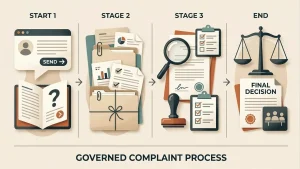
Look for the practical protections that should accompany a UKGC-licensed service. New customers must be prompted to set a financial limit before their first deposit, and account-level limit controls must be accessible. The operator must also verify your age before allowing you to deposit. Responsible-gambling tools, including self-exclusion, should be available, and there should be an internal complaints process with access to an approved Alternative Dispute Resolution service if a complaint remains unresolved.
These are not signs that a casino will suit every player. They are ways to assess whether the service has the required safeguards and a clear route for addressing problems. If the operator’s identity, licence information or customer-protection arrangements are unclear, a favourable review should not settle the question for you.
Treat reviews as clues, not guarantees
Reviews can help you identify details to check, but their conclusions depend on what they choose to assess. One may focus on the range of games, another on account features, and another on promotional terms. A ranking that places one site first does not establish that it is the right choice for your circumstances or that every claim on the page applies to the service now.
Do
- Identify the operator and their licence
- Verify the availability of required safeguards
- Look for specific, verifiable statements
Don’t
- Rely on a “best” label or ranking
- Trust sweeping promises of reliable returns
- Assume a polished design proves regulation
Look for specific, verifiable statements rather than broad praise. Does the review identify the operator? Does it explain what it means by “best”? Are the conditions it discusses visible on the casino’s own site? Be cautious if the reasoning relies on urgency, sweeping promises or claims that a particular crash game can deliver reliable returns. Marketing language does not change the financial nature of casino play.
The same care applies when a site describes a game as a crash slot or groups it with other crash games. Labels can help you find a format, but they do not tell you whether the casino is licensed, what protections it provides or whether its claims are dependable. Assess those matters separately.
Keep the financial risk in view
A casino game can produce a short-term gain, but casino games typically give the operator a predictable advantage over the long term. That remains true even when a particular session ends well. A winning outcome is not proof that a game or casino is favourable to you, and a ranking cannot remove the underlying uncertainty.
This is why a sensible assessment avoids asking only which site looks most appealing. Consider whether the operator is accountable, whether required safeguards are available and whether the information is clear enough for you to make a deliberate decision. If you cannot establish those points, do not let a “best crash casino” claim fill in the gaps. A confident label is easy to publish; it is the operator’s licence, protections and stated conditions that deserve your attention.
Bonus Terms to Check Before You Accept an Offer
A bonus is not the same as cash you can withdraw immediately. Before accepting one, read the wagering requirements: these state how much must be staked before bonus funds, or winnings linked to them, can be withdrawn. Check which balance the requirement applies to, which games count towards it and when the offer expires. The terms should be clear before you opt in.
JetX Casino Game in the UK: Demo and Risks
The calculation can make a headline offer less generous than it first appears. For instance, a £100 bonus with a 35x wagering requirement would call for £3,500 in total stakes before cash-out. That is a hypothetical illustration of how the multiplier works, not a permitted current UK offer: since 19 January 2026, gambling incentives must not require wagering of more than 10x the bonus funds. At the maximum, a £100 bonus would therefore require £1,000 in qualifying stakes. Check the operator’s written terms rather than relying on a banner or a short description.
UK incentive rules also prevent one offer from tying together different gambling products. A promotion cannot require you to play casino games and place bets on another gambling product to unlock the same reward. If an offer appears to combine those conditions, pause before accepting it and check the full terms.
This matters if you are looking at a promotion described as free play, including one associated with a crash game. “Free” does not by itself tell you whether the offer has wagering requirements, which play qualifies, or whether the resulting balance can be withdrawn. Those details belong in the offer conditions. Do not assume that a free offer means unrestricted cash, or that a game being available without a cash stake makes a promotional reward subject to no conditions.
Keep a copy of the terms shown when you accept an offer. If the wording does not make the required stakes, qualifying games or withdrawal conditions clear, you cannot reliably judge what you are agreeing to. A bonus is optional; declining it avoids having its conditions attached to your play.
Since 19 January 2026, gambling incentives in the UK must not require wagering of more than 10x the bonus funds.
Crypto Payments and Offshore Casino Conditions
A crypto casino offering crash games may handle deposits and withdrawals differently from a UKGC-licensed site. Specialist reviews of alternative platforms report that some accept Bitcoin, Ethereum or Litecoin alongside conventional cards and e-wallets. These are examples of methods that may be available, not a promise that every site accepts them. Check the cashier’s current options and any conditions attached to a method before sending funds.
Crypto transfers do not make a gambling account anonymous or remove the need to understand its terms. A platform may require account checks, and the payment route it supports can affect how you fund or withdraw from the account. Do not assume that a deposit method will also be available for withdrawals, or that a transfer can be reversed if you send it to the wrong address. Read the platform’s payment instructions carefully before proceeding.
The regulatory position matters as much as the payment menu. Non-traditional gaming platforms may operate under licences issued in Curaçao, Malta or Gibraltar, rather than under the UK Gambling Commission (UKGC). A foreign licence is not a UKGC licence, and it does not place an operator inside the UK regulatory system. Offshore sites may be accessible to people in Britain, but remote operators taking bets from British residents are required to hold a UKGC licence. Accessibility alone should not be mistaken for UK authorisation.
Payment rules also differ between regulatory settings. UK-licensed gambling operators cannot accept credit cards for gambling, including credit-card funds routed through a money service business or a wallet that permits such funds to be used. A platform’s mention of card payments is therefore not enough to establish that it is operating under UK rules. Check which regulator, if any, oversees the site and what that means for your access to complaints and consumer protections.
Amatic Slots at UK Online Casinos: How They Work
Alternative platforms may provide their own account controls, including deposit limits, session timers and self-exclusion. Their presence can be useful, but the existence of a tool does not tell you how it works or whether it meets UKGC requirements. Before using a control, find out whether it applies immediately, how it can be changed and whether self-exclusion prevents access across the operator’s other services.
If you are considering a crypto crash casino, treat the currency and the licence as separate questions. A familiar payment option does not establish that a site is locally regulated, and an account feature does not by itself show that the same safeguards apply as at a UKGC-licensed casino. Check the platform’s terms and regulatory details before depositing.
What ‘Provably Fair’ Can and Cannot Tell You
A crash game may use random numbers generated by a computer or other gaming equipment. That describes how outcomes can be produced; it does not, by itself, show that a player can independently check how a particular result was generated. The distinction matters when a casino or game provider uses the phrase “provably fair”.
The phrase suggests more than a statement that outcomes are random. It implies that the game provides some way to test its fairness using evidence, rather than asking you to accept the operator’s assurance. Before treating that claim as meaningful, look for a clear explanation of what can be checked, what information you need, and how the check relates to the outcome you saw.
What is Provably Fair?
It is a claim that a game provides a way to test its fairness using evidence, rather than asking the player to accept the operator’s assurance. It implies that outcomes can be independently verified rather than just being randomly generated.
A label alone is not proof. Nor does a game’s use of computer-generated random numbers establish that its results can be verified by players. Randomness concerns how outcomes are selected; independent verification concerns whether evidence is available to assess the process. Those are related ideas, but they are not interchangeable.
This distinction applies whether you are considering a crash title, an aviator-style game, or another fast-changing format. Searching for a provably fair crash casino or comparing crash game providers will not settle the question on its own. The relevant detail is the verification method for the specific game, not the general reputation of a casino or the wording of a promotional claim.
If the explanation is difficult to find or does not tell you what you can test, treat “provably fair” as an unsubstantiated label rather than a guarantee. Even a described checking process has limits: it may help you assess a particular aspect of how results are produced, but it cannot promise a winning result or remove the uncertainty of play. It also does not, by itself, establish that the casino is properly licensed or that every part of its service is fair.
Keep the questions separate. Does the game use computer-generated random numbers? What evidence, if any, is available for independent checking? And who is responsible for the casino operating the game? A confident answer to one does not automatically answer the others. This is especially useful when a title appears across different sites: the same game name does not prove that each version has the same verification arrangements.
Best Online Casino Game Shows in the UK: How to Compare
A transparent explanation should make the scope of any check understandable without requiring you to rely solely on marketing language. If you cannot tell what is being verified, you cannot assess the claim with confidence.
Trying a Crash Game in Demo Mode
A demo version lets you try a crash game without staking your own cash. If a casino offers this option, use it to become familiar with what is on screen and how the controls respond. A practice balance is not money you can withdraw, and a session without a cash stake is different from gambling for real.
Treat the demo as an introduction to the interface, not a rehearsal that can tell you what will happen next. A run of outcomes in practice mode cannot show you the result of a later real-money round. Nor does a smooth or convincing demo establish that a game’s outcomes have been independently checked. Those are separate questions from whether you can open and use the game.
You can use a crash casino game demo to notice whether the layout is clear, where the available controls appear and whether you understand the information presented during a round. Take your time. If you are unsure what an on-screen control does, a demo is a safer place to find out than while money is at stake.
The label can vary. A casino may describe the option as a demo, a practice version or free play; wording alone does not tell you how the game is tested or what rules apply when you switch to cash play. A crash slot demo may also appear alongside other games, but that does not make it a free-money offer. It is simply a way to try the game without placing a cash stake.
Before Switching to Cash
- Familiarise yourself with the on-screen layout
- Understand how the controls respond
- Confirm the meaning of all on-screen information
- Separate demo patterns from real-money uncertainty
Keep the boundary clear when moving from practice to real play. The pace or apparent pattern of demo rounds gives you no reliable basis for predicting later outcomes, and becoming comfortable with the controls does not remove the uncertainty of gambling. If you find yourself treating the demo as evidence that a win is due, pause rather than using that belief to justify a cash stake.
Before You Play: Understand What You Are Staking
When you play a crash casino game for money, your stake is cash committed to an uncertain outcome. The result may go your way or not; there is no certainty that a particular round will return your stake, let alone produce a gain. Treat each wager as money that could be lost, rather than as a balance you can count on getting back.
That distinction matters because a run of favourable results does not change the underlying structure of casino gambling. Casino games are designed to give the casino a predictable advantage over the long term, while still allowing players to make short-term gains. A win can be real, but it does not show that later bets are more likely to succeed or that losses will soon be recovered.
Before deciding to play, consider what the stake means for your own finances. Money used for a wager is no longer available for bills, essentials or other commitments, and a larger stake can make a loss more consequential. Choose an amount you can afford to lose without relying on a win to meet an expense. If losing it would create pressure, that is a reason not to stake it.
It can also help to separate the decision to play from the outcome of a previous round. A loss does not create an obligation to keep playing, and a win does not make the next result secure. Each stake remains exposed to uncertainty. Keeping that in view is more useful than treating short-term results as evidence that the casino’s long-term advantage has disappeared.
Barcrest Online Casinos UK: What Can Be Verified
These points apply whether you are considering one round or repeated play. The amount at risk is the amount you put forward, not a promise of what you will receive. Understand that before you choose to stake money.
Playing for Real Money on UK-Facing Sites
If you want to play a crash game for real money, check whether the operator holds a UKGC licence. Under the Gambling (Licensing and Advertising) Act 2014, an operator taking bets from British residents must be licensed. That requirement applies whether the company is based in the UK or elsewhere. For customers in England, Scotland and Wales, the licence must come from the UK Gambling Commission.
A site may be accessible from Britain without being licensed here. Offshore operators sit outside the UKGC system, so access alone does not make their real-money gambling legal in the UK. They also do not come under the same UK regulatory requirements. A site’s own claims about safety or fairness are not a substitute for checking its regulatory status.
Live Baccarat Online Casino UK: What to Check
On a UKGC-licensed site, you must be 18+ to gamble. The operator must verify your age before letting you deposit, and it must prompt you to set a financial limit before your first deposit. You should also be able to manage account-level limits. These controls are useful only if you set them at a level you can afford and pay attention to them while playing.
UK-licensed operators cannot accept credit-card payments for gambling, including credit-card funds routed through a money service business. They must provide responsible-gambling tools, including self-exclusion. If a dispute arises, the operator must have an internal complaints process and give access to an approved Alternative Dispute Resolution service.
These protections do not change the uncertainty of a real-money crash game. A licence identifies the regulator responsible for the operator and the rules it must follow; it does not promise a particular result or prevent losses. Before depositing, confirm that the licence applies to the operator you are using, rather than relying only on a UK-facing website or a familiar-looking name.
Material created by the team LottoGo